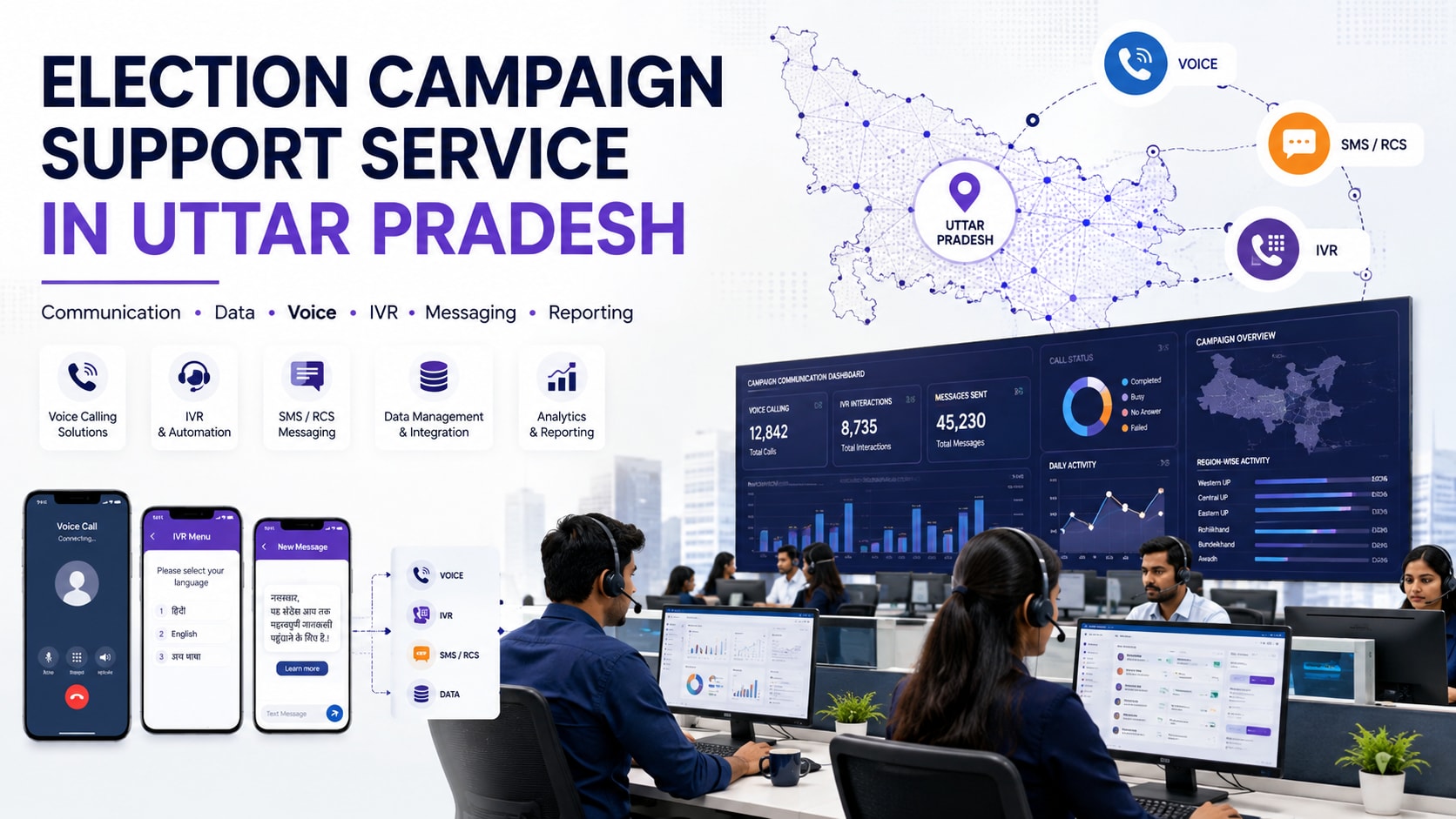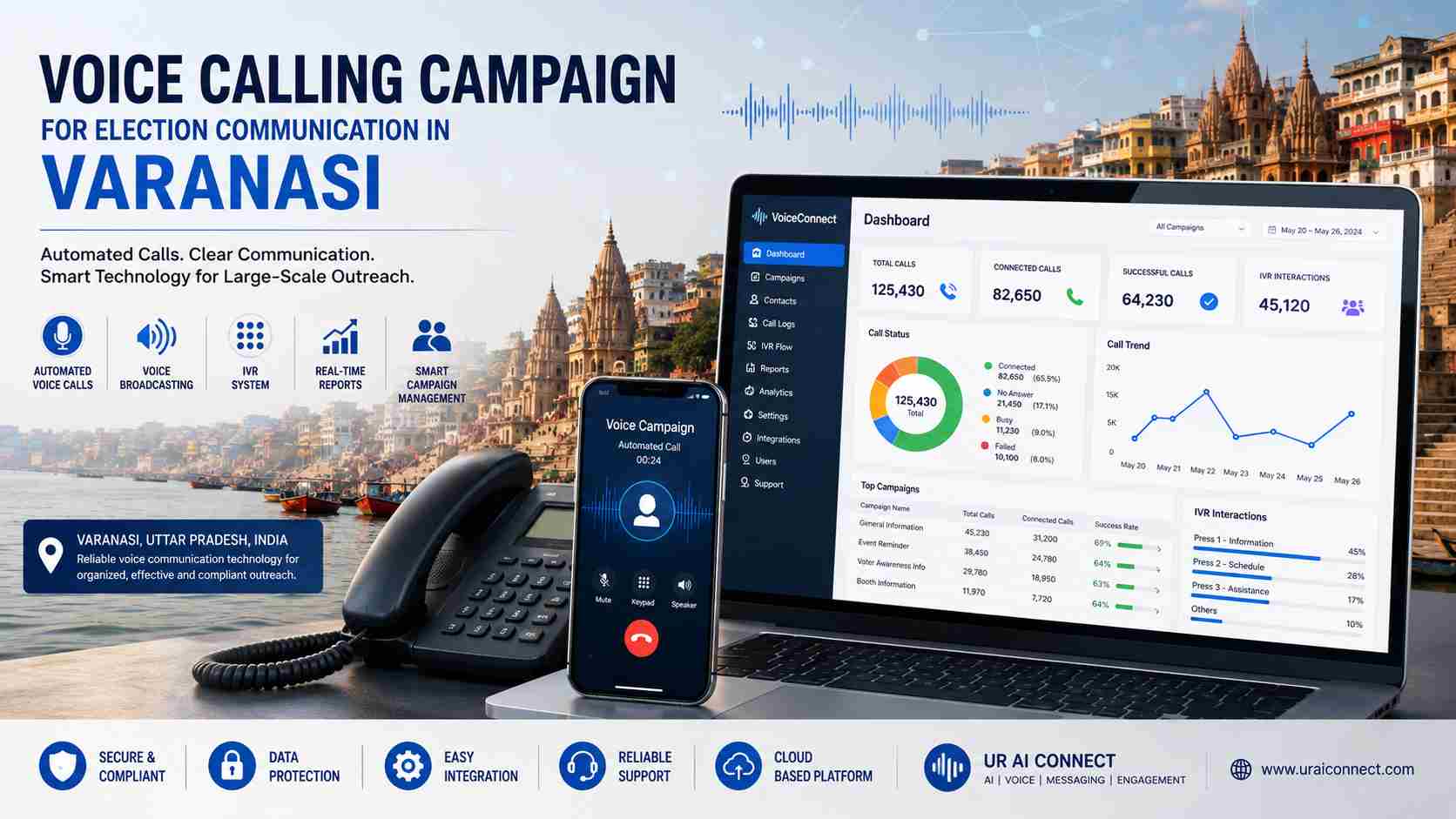

Voice Calling Services help businesses connect with customers through direct, real-time conversations for sales, support, follow-ups, notifications, and customer engagement. Modern business voice calling can combine automation, call tracking, analytics, CRM integration, and cloud-based communication to make calling more organized and scalable.
For many businesses, phone communication remains important even as email, chat, and messaging platforms continue to grow. A phone conversation can clarify a customer question quickly, help a sales representative understand a prospect's needs, or provide immediate support when a situation is difficult to resolve through text.
The challenge is that traditional calling can become difficult to manage as a business grows. Sales teams may spend too much time dialing numbers and updating records. Support teams may struggle with high call volumes. Managers may have limited visibility into call activity. Important follow-ups can also be missed when calling depends entirely on manual processes.
Modern voice calling solutions address these challenges by connecting business calling with software, automation, analytics, and existing workflows. Depending on the business requirement, voice communication services can support inbound calls, outbound calls, automated voice calls, bulk voice calls, lead follow-ups, customer notifications, appointment reminders, and other communication activities.
For businesses evaluating voice calling services in India, the right solution should not simply increase the number of calls. It should help make communication more timely, relevant, measurable, and manageable.
What Are Voice Calling Services and How Do They Work?
Voice Calling Services are business communication solutions that allow organizations to manage customer and business calls through technology, cloud infrastructure, automation, and software-based workflows. They can support both incoming and outgoing calls while providing tools for routing, monitoring, tracking, reporting, and customer engagement.
A modern business voice calling system generally connects a telephone network with a software platform. Depending on the solution, calls can be handled by human agents, automated systems, or a combination of both.
For example, a business may receive an inbound customer call. The system can identify the incoming number, route the call to the appropriate department, and record relevant call information. An outbound sales team may use a calling workflow to contact leads, record call outcomes, and schedule follow-ups.
The exact features differ between providers and plans, so businesses should evaluate a solution according to their operational requirements rather than assuming every voice calling platform provides the same capabilities.
How does business voice calling work?
Business voice calling works by connecting customers, telephone networks, software systems, and business workflows through a structured communication process.
A typical workflow may look like this:
A customer or prospect initiates a call, or the business initiates an outbound call.
The calling system receives the call request.
The system routes or processes the call according to predefined rules.
A human agent or automated calling workflow handles the interaction.
Relevant call information is captured.
The call outcome can be recorded for future action.
The information may be connected to CRM or other business systems.
Managers can review call activity and available analytics.
Follow-up actions can be triggered according to business requirements.
This approach changes calling from an isolated activity into part of a wider business communication process.
What are the main components of a business calling solution?
A business calling solution can include several technical and operational components.
Common components include:
Inbound calling
Outbound calling
Call routing
IVR or interactive voice response
Automated voice calls
Voice broadcasting
Bulk voice calls
Call recording, where permitted and appropriately configured
Call tracking
Call analytics
Agent management
Customer databases
CRM integration
Follow-up workflows
Reporting dashboards
Cloud-based calling infrastructure
Not every business requires every component. A small company may need straightforward business phone solutions and call tracking, while a larger organization may need complex routing, automation, CRM integration, analytics, and multi-team workflows.
How can voice communication services improve business communication?
Voice communication services can improve business communication by creating a more organized process for handling customer conversations.
A business can define how different types of calls should be handled. Sales inquiries can be routed to sales teams. Support requests can be directed to customer service. Appointment-related calls can follow dedicated workflows. Important notifications can be delivered through automated voice communication where appropriate.
This structure can reduce communication gaps and make it easier for teams to understand what happened during a customer interaction.
The biggest value is not simply having more calling capacity. It is having a repeatable process around each communication.
Why are voice calling services still relevant when businesses use digital messaging?
Messaging is useful for many customer interactions, but it does not completely replace voice communication.
Some situations are better handled through conversation. A customer with a complex question may prefer speaking to a representative rather than exchanging multiple messages. A sales prospect may need clarification before making a decision. A support issue may require detailed discussion.
Voice also adds conversational context that can sometimes be difficult to capture through text alone.
For this reason, businesses often use voice alongside email, SMS, WhatsApp, chat, and other digital channels rather than treating one channel as a complete replacement for all others.
How Can Voice Calling Services Help Businesses Increase Sales, Support Customers, and Scale Communication?
Voice Calling Services can support business growth by improving sales follow-ups, customer communication, support operations, notifications, and calling efficiency. When combined with automation, call tracking, analytics, and CRM integration, voice communication can become a measurable part of the customer journey instead of a disconnected manual activity.
The business value depends on how the calling workflow is designed. A poorly planned calling campaign can create unnecessary costs and poor customer experiences. A well-designed workflow can help teams focus on relevant conversations, respond faster, and maintain better records.
How can voice calling increase sales?
Voice calling can increase sales opportunities by helping sales teams contact leads promptly, qualify prospects, conduct follow-ups, and maintain consistent communication.
A common sales problem is the gap between receiving a lead and contacting that lead. If a sales team receives a high volume of inquiries, manual follow-up can become difficult. Some leads may receive a delayed response while others may be forgotten.
A structured calling workflow can help organize these activities.
For example, a business receiving inquiries from a website can create a process where:
New leads are added to a CRM.
Lead information is assigned to a sales workflow.
A sales representative receives the relevant calling task.
The lead is contacted.
The outcome is recorded.
Interested prospects receive follow-up.
Unqualified leads are categorized.
Appointments can be scheduled where appropriate.
The purpose is not to call every person repeatedly. The purpose is to make relevant follow-up more consistent.
How can voice calling support lead generation?
Lead generation calls can be used to identify potential customers, understand requirements, qualify opportunities, and move suitable prospects toward the next stage of the sales process.
For example, a real estate company may receive inquiries for properties. A calling workflow can help a sales team understand:
The customer's preferred location
Property type
Approximate budget
Purchase timeline
Preferred contact time
Level of interest
The information can then be recorded in a CRM or lead management system.
This makes the calling process more useful than simply marking a phone number as "contacted."
How can sales teams use automated calling?
Sales teams can use automated calling solutions for repetitive and structured communication tasks.
Possible applications include:
Lead follow-up reminders
Appointment confirmations
Lead qualification workflows
Callback requests
Customer notifications
Campaign-related calls
Post-inquiry follow-ups
Automation is particularly useful when the communication follows a predictable pattern.
However, automation should not be treated as a reason to increase call frequency without considering customer preferences. Excessive calling can damage customer trust and reduce the effectiveness of future communication.
Why do unanswered calls affect lead conversion opportunities?
An unanswered or delayed call can create friction between a customer's interest and the business's response.
A potential customer may contact several companies at the same time. If one business responds quickly and another responds much later, the customer may continue with the business that communicates first.
This does not mean every unanswered call results in a lost sale. Many factors influence conversion. However, consistent response processes can reduce avoidable communication gaps.
Businesses can improve their process by defining:
Who receives new inquiries
How quickly leads should be contacted
How many follow-ups are appropriate
When a lead should be marked inactive
Which information should be recorded
When a human representative should take over
How can voice calling support customer service?
Customer support calls allow customers to explain issues directly and receive assistance through conversation.
Voice communication can be especially useful when a problem involves several steps or requires clarification. Instead of exchanging many short messages, a customer and support representative can discuss the issue in one conversation.
Business calling services can support customer service through:
Inbound call routing
IVR
Department-based call distribution
Call queues
Customer identification
Support follow-up
Call tracking
Analytics
Escalation workflows
The exact features depend on the calling platform and configuration.
How can an IVR improve customer communication?
An IVR, or Interactive Voice Response system, allows callers to interact with a voice menu using spoken responses or keypad inputs.
A simple example might be:
"Press 1 for sales, press 2 for customer support, press 3 for billing."
The system can then route the customer to the appropriate department.
A well-designed IVR can reduce unnecessary transfers and help customers reach the right team. A poorly designed IVR can have the opposite effect if it contains too many options or makes it difficult to reach a human representative.
Good IVR design generally focuses on simplicity.
What are the benefits of 24/7 voice communication?
Technology can allow certain voice workflows to operate outside normal business hours. This can be useful for automated notifications, information requests, appointment-related communication, or other predefined interactions.
However, 24/7 availability does not automatically mean that every business needs a fully automated 24-hour calling operation.
Businesses should first determine:
When customers actually need support
Which interactions require human agents
Which tasks can safely be automated
What happens when a customer needs human assistance outside working hours
How urgent requests are escalated
The goal should be useful availability rather than simply being available at all times.
Can voice calling services reduce manual work?
Voice calling services can reduce repetitive manual work when calling tasks follow predictable workflows.
For example, a business may spend significant staff time manually dialing numbers, repeating standard information, updating call outcomes, and creating follow-up reminders.
Automation can assist with parts of this process.
The greatest efficiency gains often come from connecting several activities together rather than automating one isolated step.
For example:
Lead received → calling workflow → interaction → outcome captured → CRM updated → follow-up scheduled.
This creates a continuous business process.
How can bulk voice calls be used responsibly?
Bulk voice calls allow businesses to communicate with many recipients through a structured voice campaign.
Possible applications include:
Appointment reminders
Service notifications
Event information
Delivery-related communication
Customer alerts
Approved promotional campaigns
Operational announcements
Bulk voice calling should always be based on an appropriate communication strategy and applicable legal requirements.
Businesses should avoid treating large-scale calling as a numbers game. Relevance, timing, consent where required, opt-out handling, and customer expectations all matter.
For example, the U.S. Federal Trade Commission explains that covered telemarketing activities can be subject to requirements involving disclosures, calling times, Do Not Call rules, caller identification, abandoned calls, and prerecorded messages.
Businesses operating in India should also review the regulations and telecom requirements applicable to their specific campaigns and audience before launching automated or promotional calling.
What is voice broadcasting?
Voice broadcasting is a communication method in which a predefined voice message is delivered to multiple recipients through an automated calling process.
It can be useful for information that does not require a long conversation.
Examples can include:
Appointment reminders
Event reminders
Service notifications
Public information
Internal business alerts
Customer updates
The effectiveness of voice broadcasting depends heavily on message relevance. A short, clear, useful message is generally more appropriate than a long promotional script.
What are the limitations of automated voice calls?
Automated calling has several limitations.
It may not be suitable when:
The customer has a complex problem
The interaction requires empathy
Negotiation is necessary
The customer needs customized advice
The situation is sensitive
A human decision is required
Automation works best when the task is predictable and the desired outcome is clearly defined.
Human agents remain important for situations that require context, judgment, relationship-building, and problem-solving.
How do call tracking and analytics help businesses?
Call tracking helps businesses understand what happens across their calling activities. Analytics can turn call records into operational insights that managers can use to improve workflows.
Useful metrics may include:
Number of calls
Answered calls
Missed calls
Call duration
Call outcomes
Response patterns
Agent activity
Campaign activity
Follow-up status
The exact metrics available depend on the calling system.
For a sales manager, call analytics may reveal that many leads are being contacted but few are progressing. That could indicate an issue with lead quality, messaging, follow-up timing, sales scripts, or the sales process.
Analytics should therefore be used for diagnosis, not just reporting.
Why do call records matter?
Call records provide a history of communication activity.
Without records, a manager may know that calls are being made but have little understanding of what happens afterward.
Call records can help answer questions such as:
Was the customer contacted?
When was the call made?
Was the call answered?
What was the outcome?
Does a follow-up remain pending?
Which team handled the interaction?
When appropriate privacy and retention practices are followed, this information can improve operational visibility.
How can CRM integration improve calling workflows?
CRM integration connects calling activity with customer or lead records.
Instead of maintaining separate calling data and customer information, a business can create a connected workflow.
For example:
A lead enters the CRM.
The lead is assigned to a sales team.
The sales representative makes a call.
The call outcome is recorded.
The next action is created.
The customer record reflects the latest interaction.
This can reduce manual data entry and improve continuity between marketing, sales, and customer support.
CRM integration is especially valuable for businesses where several employees may communicate with the same customer over time.
What business communication challenges can voice calling solve?
Businesses commonly face several communication challenges as they grow.
These include:
Missed calls
Slow lead follow-up
Manual dialing
Inconsistent customer records
High call volumes
Poor visibility into agent activity
Difficult campaign measurement
Disconnected CRM and calling data
Repetitive customer notifications
Limited after-hours communication
Voice calling solutions can address some of these problems through automation and centralized management.
They cannot solve every communication problem automatically. Process design, employee training, data quality, customer preferences, and compliance still play major roles.
Which industries can benefit from business voice calling?
Many industries can use voice communication services when phone interaction is relevant to their customer journey.
Common examples include:
How can real estate businesses use voice calling?
Real estate businesses often manage large numbers of inquiries and follow-ups.
Voice calling can support:
Lead qualification
Property inquiry follow-up
Appointment scheduling
Site visit reminders
Customer notifications
Sales follow-ups
A structured workflow can help sales teams prioritize interested prospects rather than manually contacting every lead in the same way.
How can healthcare businesses use voice communication?
Healthcare organizations can use voice communication for appropriate administrative and customer-service workflows.
Possible applications include:
Appointment reminders
Scheduling communication
General service information
Follow-up notifications
Customer support
Healthcare organizations should be particularly careful with sensitive information, privacy, consent, and applicable regulations. Automated calling should not be used as a substitute for professional medical judgment.
How can education companies use voice calling?
Educational institutions and training organizations can use calling for:
Admission inquiries
Course follow-ups
Appointment scheduling
Student notifications
Event reminders
Lead qualification
Calling can become especially useful when a prospective student needs additional information before making a decision.
How can financial businesses use business calling?
Financial businesses can use voice communication for suitable customer-service and notification workflows, subject to applicable regulatory requirements.
Potential applications include:
Service notifications
Customer support
Appointment scheduling
Follow-up communication
Operational alerts
Sensitive financial information requires strong controls and should not be exposed through inappropriate automated communication.
How can ecommerce businesses use voice calling?
Ecommerce companies can use voice communication for selected customer notifications and service workflows.
Examples include:
Order-related notifications
Delivery communication
Customer support
Service follow-ups
Feedback requests
The specific use case should match customer expectations and applicable communication rules.
How can travel and hospitality businesses use voice calling?
Travel and hospitality businesses frequently communicate around reservations, schedules, and customer support.
Voice workflows can support:
Booking confirmation
Appointment or reservation reminders
Customer inquiries
Service notifications
Follow-up communication
What common mistakes do businesses make with voice calling?
The technology itself is rarely the only factor determining success. Many problems come from poor implementation.
Common mistakes include:
Calling without a clear objective
Contacting customers too frequently
Using overly long scripts
Ignoring customer preferences
Failing to record outcomes
Keeping calling data separate from the CRM
Measuring only call volume
Automating conversations that require human judgment
Failing to plan escalation
Ignoring compliance requirements
Treating every lead identically
Failing to review campaign performance
A business should define the communication objective before choosing the technology.
How should businesses balance automation with human agents?
A useful approach is to divide communication according to complexity.
Automation can handle:
Repetitive notifications
Simple information
Basic qualification
Appointment reminders
Routine follow-ups
Human agents can handle:
Complex questions
Negotiation
Complaints
Sensitive issues
High-value sales conversations
Situations requiring judgment
This hybrid approach allows businesses to use automation for efficiency without removing human interaction where it matters.
How Should a Business Choose the Right Voice Calling Provider?
A business should choose a voice calling provider based on communication requirements, reliability, scalability, integrations, automation capabilities, analytics, security, support, and compliance considerations. The best provider is not necessarily the one with the longest feature list; it is the one that fits the business's actual workflow.
Before selecting a provider, decision-makers should map the complete communication process.
What should businesses evaluate before choosing a voice calling solution?
The evaluation should cover both technical and business requirements.
Important areas include:
Inbound calling
Outbound calling
IVR capabilities
Call routing
Voice automation
Bulk calling capabilities
Call tracking
Analytics
CRM integration
Reporting
Scalability
Reliability
Security
Support
Workflow customization
Regulatory considerations
A business should also consider how easily employees can use the system.
A technically powerful platform can still create operational problems if employees find it difficult to manage.
Why is scalability important in business calling?
A business may start with a small number of calls and later experience a significant increase in customer interactions.
A scalable calling solution should be capable of supporting changing communication requirements without forcing the company to redesign its entire workflow.
Scalability can involve:
More users
More departments
Higher call volumes
Additional campaigns
New locations
More complex routing
Additional CRM workflows
Businesses should consider both current needs and realistic future requirements.
Why are security and reliability important for voice communication?
Calling systems can process customer information, contact details, and business communication records. Reliability also matters because communication failures can affect sales and support.
A provider evaluation should therefore consider:
Data handling practices
Access controls
Authentication
System availability
Backup processes
Monitoring
Data retention
Privacy controls
Vendor support
The exact requirements vary by industry and jurisdiction.
Security should not be treated as a feature that is checked only after implementation. It should be part of vendor selection.
How important is CRM integration?
CRM integration can be highly important when sales or support teams depend on customer records.
Without integration, employees may have to switch between multiple systems.
With an appropriate integration, calling can become part of the customer record and workflow.
Before selecting a provider, businesses should determine:
Which CRM is currently used
What information needs to move between systems
Which events should trigger calls
Which call outcomes should be recorded
Whether automation is required
Whether integration is native or requires additional development
How should businesses evaluate voice call analytics?
Analytics should answer business questions rather than simply provide large amounts of data.
A useful analytics system should help answer:
How many leads were contacted?
How many calls were answered?
Which campaigns generated meaningful conversations?
How quickly are leads being contacted?
Which follow-ups remain pending?
Where are customers dropping out?
Which calling workflows require improvement?
Businesses should define these questions before deciding which analytics features they need.
What should businesses consider about calling compliance?
Calling campaigns must be designed around the laws, regulations, consent requirements, and industry-specific rules that apply to the business and recipients.
The FTC's telemarketing guidance, for example, identifies requirements and restrictions covering areas such as Do Not Call requests, calling hours, caller identification, abandoned calls, and prerecorded telemarketing messages in covered circumstances.
The rules in one country should not automatically be assumed to apply in another. Businesses operating in India should assess the applicable Indian telecom, privacy, consumer-protection, and promotional communication requirements for their specific use case.
A responsible voice calling strategy should include:
Appropriate consent practices where required
Clear identification
Respect for opt-out requests
Contact-frequency controls
Appropriate calling hours
Data protection
Accurate records
Campaign monitoring
How can UraiConnect support business voice communication?
UraiConnect can be positioned as a business communication solution for organizations looking to structure voice-based customer communication, calling workflows, and related engagement activities.
Its relevance can be considered in areas such as:
Business voice calling
Voice communication workflows
Calling automation
Customer engagement
Sales communication
Customer support
Business calling processes
Businesses considering UraiConnect should evaluate the solution against their specific communication requirements, integration needs, campaign structure, and operational goals rather than relying on generic assumptions.
The official UraiConnect website can be explored for more information about its business communication solutions:
Explore UraiConnect's business communication solutions
What practical steps can businesses take before implementing voice calling automation?
A structured implementation process can reduce unnecessary complexity.
Step 1: Define the communication objective
The business should identify what the calling system needs to achieve.
Possible objectives include:
Faster lead follow-up
Better customer support
Appointment reminders
Customer notifications
Sales qualification
Campaign communication
A system should not be implemented simply because automation is available.
Step 2: Map the current calling process
The business should document how calls currently move through the organization.
This can reveal:
Manual tasks
Delays
Repeated work
Missed follow-ups
Data gaps
Customer experience problems
Step 3: Identify automation opportunities
Not every task should be automated.
The business should identify repetitive activities that have predictable outcomes.
Step 4: Define human escalation
Automated workflows should have a clear path to human assistance when required.
Step 5: Connect the CRM or business system
Where appropriate, calling activity should connect with existing customer records.
Step 6: Define success metrics
Metrics should be selected according to the business goal.
For sales, this may include qualified opportunities or completed follow-ups.
For support, it may include response times, resolution workflows, or missed-call rates.
Step 7: Test before scaling
A limited pilot can reveal issues with scripts, routing, customer responses, integrations, and reporting.
Step 8: Review and improve
Calling workflows should be reviewed regularly.
Customer preferences, campaign performance, lead quality, and business requirements can change over time.
How can businesses improve customer experience with voice calling?
Customer experience improves when calls are relevant, timely, easy to understand, and connected to the customer's actual need.
Businesses can improve calling experiences by:
Keeping scripts concise
Avoiding unnecessary calls
Providing clear options
Making it easy to reach human support
Respecting opt-out requests
Calling at appropriate times
Maintaining accurate customer information
Using customer history where appropriate
Creating clear escalation paths
Technology should make communication easier for the customer, not simply easier for the business.
How can voice calling services support business growth in India?
Voice calling services in India can support businesses that rely on direct customer communication, sales follow-up, customer support, appointment management, notifications, and other voice-based workflows.
The Indian business environment includes companies ranging from local service providers and startups to larger organizations. Their communication needs can vary significantly.
A local business may need a simple calling workflow for inquiries. A growing company may need CRM integration and analytics. A larger organization may require more complex routing and automation.
For that reason, business communication solutions in India should be selected according to the company's customer journey and operational requirements.
What is the best way to measure the success of a voice calling campaign?
The right measurement depends on the campaign objective.
For lead generation, useful measures may include:
Contact rate
Qualified lead rate
Follow-up completion
Appointment rate
Opportunity creation
For customer support, useful measures may include:
Answer rate
Missed-call rate
Response time
Resolution process
Escalation rate
For notifications, the business may focus on:
Delivery
Successful contact
Customer response
Opt-out activity
Call volume alone is rarely enough to determine whether a campaign is successful.
How can businesses avoid overusing automated calls?
Businesses should use automation selectively.
A simple rule is to ask whether the call provides clear value to the recipient.
Before launching a campaign, the business should consider:
Does the recipient expect this communication?
Is the information useful?
Is the timing appropriate?
Is the message short enough?
Can the recipient opt out where required?
Is there a clear reason for the call?
Is human assistance available if needed?
A smaller number of relevant calls can produce a better customer experience than a larger number of poorly targeted calls.
How can UraiConnect fit into a modern business communication strategy?
UraiConnect can be considered as part of a broader communication strategy where businesses combine voice, automation, customer engagement, and business workflows.
The strongest implementation approach is not simply to add another calling tool. It is to connect communication with the wider customer journey.
For example:
Marketing activity → lead generation → qualification → voice communication → sales follow-up → CRM update → customer support → retention communication.
This approach gives voice calling a clear role inside the business rather than treating it as an isolated technology.
Frequently Asked Questions About Voice Calling Services
What are voice calling services?
Voice calling services are technology-based communication solutions that help businesses manage inbound and outbound phone interactions. Depending on the provider, they can include calling, IVR, routing, automation, call tracking, analytics, CRM integration, notifications, and other business communication features.
How can voice calling services help a business grow?
Voice calling services can support growth by improving lead follow-up, customer communication, sales workflows, support operations, notifications, and communication efficiency. Their impact depends on implementation. Businesses benefit most when calling is connected to clear workflows, customer records, analytics, and appropriate follow-up processes.
Are voice calling services useful for small businesses?
Yes. Small businesses can use voice calling services for customer inquiries, lead follow-up, appointment reminders, support, and notifications. The required setup does not need to be as complex as an enterprise system. A small company can start with the workflows that solve its most important communication problem and expand later.
Can voice calls be automated?
Yes. Certain voice calls can be automated when the communication follows a predictable workflow. Examples include appointment reminders, notifications, basic qualification, and predefined information. Automation should not be used for every interaction. Complex, sensitive, or high-value conversations may still require human agents.
What is voice broadcasting?
Voice broadcasting is an automated communication method that sends a predefined voice message to multiple recipients. It can be used for suitable notifications, reminders, announcements, and approved campaigns. The message should be relevant and appropriately targeted, and businesses should follow applicable communication and privacy requirements.
How does call tracking help businesses?
Call tracking helps businesses understand calling activity by recording useful information such as call attempts, answered calls, missed calls, durations, outcomes, and follow-up activity, depending on the system. This information can help managers identify communication gaps and improve sales, support, or campaign workflows.
Can voice calling integrate with a CRM?
Yes, many modern voice calling solutions can integrate with CRM systems. Integration can connect call activity with customer records, lead status, follow-up tasks, and other workflow information. The exact capabilities depend on the calling provider and CRM being used.
Which industries use business voice calling?
Business voice calling can be useful across real estate, healthcare administration, education, ecommerce, financial services, travel, hospitality, professional services, and other industries where direct customer communication is important. Each industry requires a different workflow, particularly where sensitive information or sector-specific regulations are involved.
What should businesses consider when choosing a voice calling provider?
Businesses should evaluate calling capabilities, automation, IVR, call routing, analytics, CRM integration, scalability, reliability, security, support, pricing structure, and compliance requirements. The provider should fit the company's workflow rather than simply offering the largest number of features.
Is voice calling better than messaging?
Neither channel is universally better. Messaging is useful for quick written communication, while voice is valuable when a conversation, clarification, or human interaction is needed. Many businesses benefit from combining voice calling with SMS, WhatsApp, email, chat, and other communication channels.
How can voice calling support customer support teams?
Voice calling can help customer support teams route calls, manage inbound inquiries, handle high call volumes, track interactions, and create follow-up workflows. IVR and routing can help customers reach the appropriate department, while analytics can provide managers with visibility into support activity.
What is voice call automation?
Voice call automation uses software and predefined workflows to automate parts of the calling process. Depending on the solution, it may include automated dialing, voice messages, call routing, qualification, reminders, notifications, and follow-up processes. Automation should be designed around clear business and customer needs.
Are bulk voice calls suitable for every business?
No. Bulk voice calling is most suitable when a business has a legitimate, useful reason to communicate with many recipients through voice. Businesses should consider customer expectations, consent requirements, opt-out handling, message relevance, timing, and applicable regulations before launching a campaign.
How can businesses improve the results of sales calls?
Businesses can improve sales calling by prioritizing relevant leads, responding promptly, using clear scripts, understanding customer requirements, recording outcomes, scheduling follow-ups, and reviewing call analytics. The objective should be better conversations and more consistent follow-up rather than simply increasing the number of calls.
How can UraiConnect help with business voice communication?
UraiConnect can support businesses looking for voice communication and business calling solutions as part of their broader customer engagement strategy. Businesses can evaluate UraiConnect according to their requirements for voice workflows, calling automation, customer communication, sales processes, support operations, and related business communication needs.
Conclusion: How Can Voice Calling Services Support Long-Term Business Growth?
Voice Calling Services can support business growth by creating more organized and measurable communication across sales, customer support, lead generation, notifications, and follow-up workflows.
The greatest value comes when voice communication is connected to the wider business process. Call tracking can provide visibility. Analytics can reveal communication patterns. CRM integration can connect calls with customer records. Automation can reduce repetitive work. Human agents can remain responsible for conversations that require judgment and relationship-building.
Businesses should also recognize the limitations of calling technology. More calls do not automatically mean more growth. Poorly targeted or excessive calls can frustrate customers and create compliance risks. Successful voice communication depends on relevance, timing, customer expectations, appropriate automation, and responsible data handling.
For organizations evaluating business voice calling solutions in India, the selection process should begin with business requirements rather than technology features alone. The right solution should fit the customer journey, existing workflows, team capabilities, and long-term communication strategy.
UraiConnect can be explored as a business communication solution for organizations looking to develop structured voice calling, customer engagement, and communication workflows.
Visit UraiConnect to explore its business communication solutions