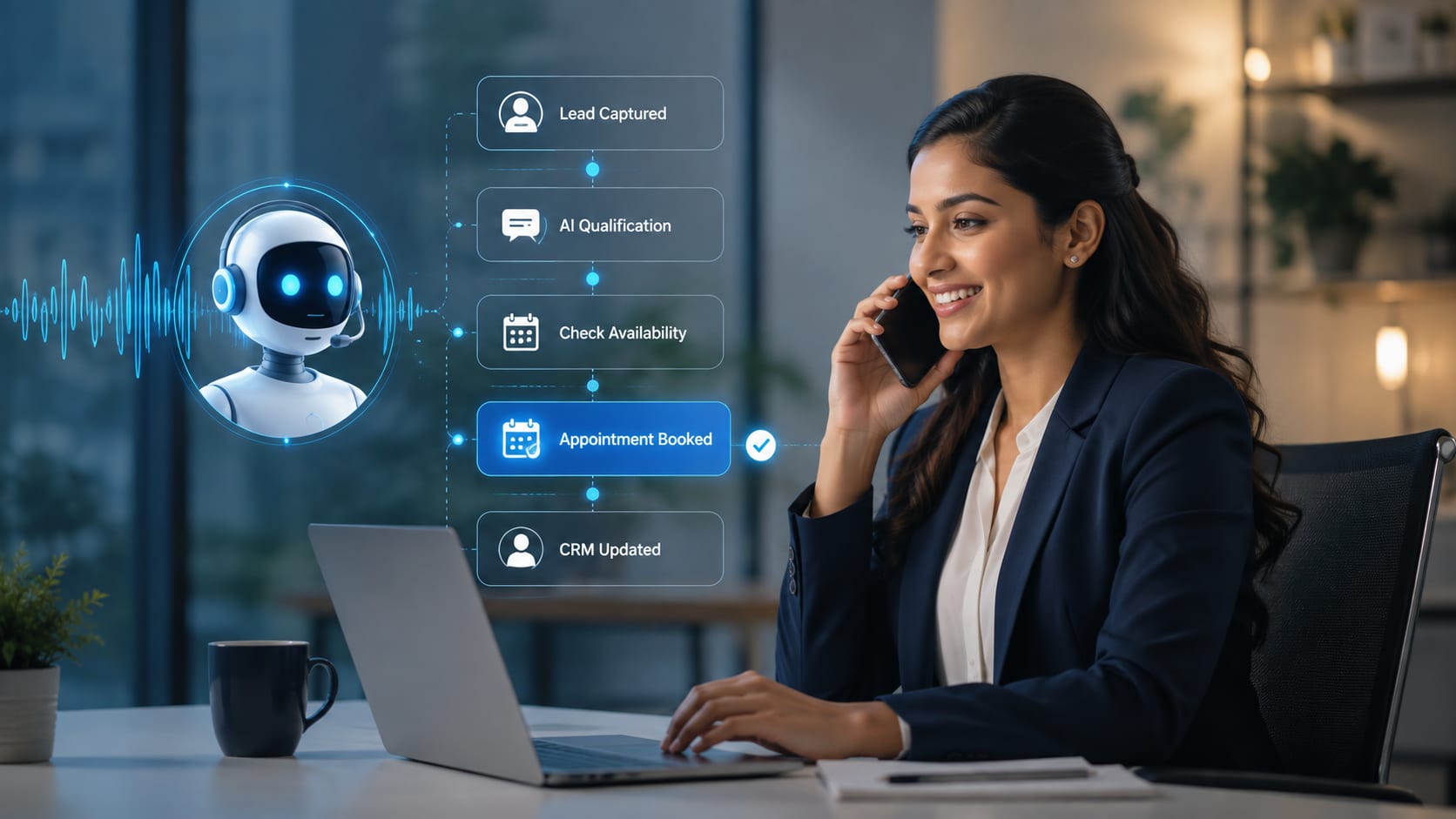

Election communication involves more than preparing a message and sending it to a large contact list. Organizations managing election-related communication may need coordinated voice calling, WhatsApp communication, contact-data organization, scheduling, reporting, multilingual content, and compliance checks. In Uttar Pradesh, these operational requirements can become particularly important because communication programs may involve multiple cities, districts, languages, teams, and campaign schedules.
Election voice call campaign services in Uttar Pradesh generally refer to technology-supported voice communication systems used to distribute pre-recorded or automated messages at scale, while related WhatsApp and data-support services help organize other communication workflows. The exact technology, permitted use, recipient eligibility, consent requirements, and election-related restrictions depend on the communication type and applicable rules.
A responsible communication workflow therefore begins with accurate data, approved content, appropriate infrastructure, clear scheduling, and compliance review rather than simply maximizing call volume.
This article explains how election voice calling, WhatsApp communication, and data-support systems can work as parts of an organized communication infrastructure across Uttar Pradesh and nearby business-service markets such as Delhi, Noida, and Gurugram.
What are election voice call campaign services in Uttar Pradesh?
Election voice call campaign services in Uttar Pradesh are technology-enabled communication services that can support organized voice-message distribution, call scheduling, delivery monitoring, contact management, and reporting. Depending on the use case and applicable regulations, these systems may use automated or recorded voice communication to deliver approved information to an eligible recipient base.
The basic concept is straightforward. Instead of requiring a person to manually call every contact, a technology platform can automate parts of the calling workflow.
A typical system can include:
Contact-data preparation
Message or script preparation
Voice recording
Call scheduling
Automated voice delivery
Call-status monitoring
Reporting
Follow-up workflow
Data-quality review
For organizations operating across Uttar Pradesh, the operational challenge is often not the voice technology itself. The larger challenge is coordinating communication responsibly across different locations, teams, languages, schedules, and datasets.
What is an election voice calling service?
An election voice calling service is a communication infrastructure that allows an organization to distribute a recorded or automated voice message through telephone calls.
Depending on the platform, the workflow can involve:
Uploaded contact lists
Approved voice recordings
Call scheduling
Automated dialing
Call-progress information
Delivery or status reports
Retry logic
IVR functionality
Campaign-level reporting
The term “election voice calling services” can describe several different technical models. A system may simply distribute a pre-recorded message, while a more advanced platform may support interactive IVR or automated conversational workflows.
The exact functionality depends on the provider and the communication objective.
How does bulk voice calling work?
Bulk voice calling generally follows a structured sequence.
Step 1: Data preparation
The organization prepares the contact information required for the communication activity. Duplicate, incomplete, outdated, or incorrectly formatted records should be identified before any communication is scheduled.
Step 2: Content preparation
A voice message is written and reviewed. The language, duration, pronunciation, clarity, and factual accuracy should be checked before recording.
Step 3: Voice recording
The approved script is converted into a recorded voice message or another supported voice format.
Step 4: Campaign configuration
The message, recipient list, timing, calling parameters, and reporting requirements are configured within the communication platform.
Step 5: Call delivery
The system initiates calls according to the configured schedule and applicable telecom requirements.
Step 6: Reporting
Call outcomes can be organized into reports showing available delivery and status information.
Step 7: Review
The organization reviews the results and determines whether legitimate follow-up communication is required.
This workflow shows why bulk voice call for election campaigns should be viewed as an operational process rather than simply a high-volume dialing feature.
What role does recorded voice communication play?
Recorded voice communication can be useful when the same approved information needs to be communicated consistently.
A recorded message can help maintain:
Consistent wording
Consistent pronunciation
Consistent duration
Consistent information
Centralized content control
For multilingual environments, separate approved recordings can be prepared for different languages where appropriate.
However, localization should not mean creating different factual claims for different audiences. The information should remain accurate while language and presentation can be adapted for comprehension.
Why can language matter in Uttar Pradesh?
Uttar Pradesh contains a large and geographically diverse population. Communication requirements can therefore differ between locations.
Language planning may involve:
Hindi communication
Regional pronunciation considerations
Simple vocabulary
Clear audio quality
Appropriate speaking speed
Location-specific operational information
A communication provider can support the technical distribution of different approved recordings, but the responsibility for ensuring that the content is accurate and appropriate remains with the organization commissioning the communication.
What is IVR in election communication?
IVR, or Interactive Voice Response, allows a caller to interact with a telephone system through keypad selections or voice responses.
For example, an informational IVR system could provide menu options such as:
Hear general information
Hear event details
Repeat the information
Connect to an information desk
End the call
The exact options depend on the purpose and legal requirements of the communication.
IVR should not be confused with an ordinary recorded voice broadcast. A broadcast primarily delivers a message, while an interactive IVR system allows the recipient to navigate through predefined options.
What information can call reports contain?
Reporting capabilities vary between providers and telecom systems. Depending on the platform, reports may include operational information such as:
Call attempt status
Connected calls
Unanswered calls
Busy numbers
Failed attempts
Call duration
Campaign timing
IVR responses
Aggregated performance information
Reports should be used for operational monitoring rather than interpreted as proof that a recipient agreed with, understood, or acted upon a political message.
That distinction is important when evaluating election communication technology.
How should contact data be prepared?
Data quality is one of the most important parts of any large communication workflow.
A basic data-cleaning process can check for:
Duplicate numbers
Invalid numbers
Missing fields
Incorrect formats
Outdated records
Inconsistent location fields
Duplicate records across files
Unnecessary personal information
Data should be collected and processed according to applicable privacy, telecom, contractual, and election-related requirements.
The objective should be accurate and appropriately sourced data, not simply the largest possible database.
What is election data support?
Election data support services can refer to technical assistance with organizing, cleaning, structuring, or preparing communication-related datasets.
Depending on the provider, this could include:
Data formatting
Duplicate identification
Contact-list organization
Field normalization
Campaign-list segmentation for operational purposes
Import/export preparation
Data-quality checks
Reporting preparation
The term should not automatically be interpreted as access to confidential electoral records, government databases, voter information, or restricted datasets.
A provider should clearly explain what data it actually receives, what it processes, where it comes from, and what services are being performed.
Why does data accuracy matter?
An inaccurate database can create operational problems.
For example, a poorly maintained list can produce:
Failed calls
Duplicate communication
Calls to incorrect numbers
Incomplete reporting
Wasted communication resources
Poor internal tracking
Data accuracy therefore affects both efficiency and responsible communication.
How do election voice calling, WhatsApp and data support services work together?
Voice calls, WhatsApp communication, and data support can function as separate but coordinated components of an election communication workflow. Data support organizes the operational information, voice systems handle telephone communication, and WhatsApp can support approved digital communication. Their combination requires consistent content, controlled access, accurate records, appropriate permissions, and compliance review.
The three components solve different operational problems.
Voice communication provides a telephone-based channel. WhatsApp can provide a digital messaging channel. Data support helps organize the information needed to manage these channels.
How does voice communication fit into a broader workflow?
A simplified communication workflow can look like this:
Data preparation → Content approval → Voice recording → Scheduling → Call delivery → Reporting → Review
The advantage of this structure is that each stage has a clear responsibility.
For example:
Data teams can manage formatting.
Content teams can prepare approved scripts.
Voice teams can manage recordings.
Technology teams can configure delivery.
Operations teams can monitor reports.
Compliance teams can review applicable requirements.
This separation can reduce avoidable errors.
What does an election WhatsApp campaign service include?
Election WhatsApp campaign services can refer to technology-assisted WhatsApp communication used for approved informational or campaign-related messages.
Depending on the setup, the service may involve:
Message preparation
Media preparation
Contact management
Message scheduling
Approved templates
Delivery monitoring
Response management
Business workflow integration
However, WhatsApp communication should not be treated as an unrestricted bulk-messaging channel.
Organizations should use the applicable WhatsApp platform policies, telecom requirements, privacy requirements, and election-related rules relevant to their activity.
The content and recipient relationship also matter.
What is the role of campaign communication data?
Communication data can contain operational fields required to manage a campaign workflow.
Examples may include:
Contact number
Communication status
Language preference where lawfully and appropriately collected
Campaign identifier
Delivery status
Date and time
Follow-up status
Internal reference number
Only information necessary for the intended workflow should be retained.
Organizations should also establish appropriate access controls so that personnel can only access information required for their role.
Why is data cleansing important before voice broadcasting?
Suppose an organization has five separate spreadsheets containing contact numbers. Each spreadsheet may have different formatting, duplicated records, or outdated information.
Sending those files directly to a calling platform could result in inefficient communication.
A data-cleansing process can identify:
Duplicate records
Invalid telephone formats
Missing information
Conflicting fields
Unnecessary columns
Formatting inconsistencies
After cleaning, the resulting file can be prepared according to the requirements of the communication platform.
How can multilingual communication be organized?
A multilingual workflow generally requires more than translating text.
The organization should consider:
Translation accuracy
Local terminology
Pronunciation
Voice clarity
Recording quality
Message duration
Cultural and contextual accuracy
Consistency between language versions
For example, if a core informational message is approved in Hindi and another language, both versions should communicate the same underlying facts.
Voice recording quality also matters. Poor pronunciation, background noise, or excessive speaking speed can reduce comprehension.
How can communication scheduling be managed?
Scheduling can help organizations control when different communication activities occur.
A scheduling plan can specify:
Campaign date
Start time
End time
Message version
Communication channel
Recipient list
Responsible team
Reporting requirements
Scheduling should also account for applicable legal restrictions, telecom requirements, platform policies, and recipient expectations.
Election-related communication can be subject to specific restrictions during particular stages of the electoral process. The Election Commission of India states that the Model Code of Conduct becomes operational from the announcement of the election schedule and continues until the election process is completed.
The ECI also provides official election-permission mechanisms through its Suvidha system for eligible permission requests.
Organizations should therefore verify current requirements for the specific election and activity rather than relying on a generic campaign schedule.
What should be monitored after communication begins?
Monitoring can include:
Delivery status
Failed calls
Unanswered calls
Message version
Communication timing
Technical errors
Data anomalies
Complaint indicators
Platform status
A reporting dashboard can help an operations team identify technical problems without requiring the entire campaign to be manually reviewed.
However, operational metrics should not be confused with political outcomes.
For example, a high connection rate does not establish that recipients agreed with the content.
How can communication analytics help?
Analytics can help identify operational patterns.
A report might show that:
One recording has higher completion rates.
A particular time window has more unanswered calls.
A particular data file contains more invalid numbers.
One communication channel has higher technical delivery.
Certain records are repeatedly failing.
These observations can improve the technical workflow.
They should not be used to infer sensitive personal characteristics or individual political preferences unless such processing is clearly lawful, necessary, and appropriately authorized.
What are the main privacy considerations?
Privacy should be considered throughout the communication lifecycle.
Important questions include:
Where did the data come from?
What was the original purpose of collection?
Is the organization authorized to use the data?
What information is actually necessary?
Who can access it?
How long will it be retained?
How is it transferred?
How is it deleted?
What happens if an individual objects or complains?
TRAI provides specific guidance for commercial communication and describes requirements around registered entities, headers, content templates, and consent within the applicable telecom framework.
Because election communication can involve legal frameworks beyond ordinary commercial communication, organizations should not assume that a rule applicable to one communication category automatically applies identically to another. A compliance review should identify the rules applicable to the exact activity.
What is consent and why does it matter?
TRAI describes consent as voluntary permission given by a customer to a sender to receive commercial communication relating to a specific purpose, product, or service.
The distinction between commercial communication and election-related political communication is important. A service provider should not represent one regulatory category as another merely for convenience.
Instead, the organization should determine which rules apply to its particular communication.
Where consent is required, it should be appropriately collected, documented, and managed.
What should happen if recipients complain?
A responsible communication system should have a complaint-management process.
This can include:
Recording the complaint.
Identifying the communication source.
Checking the relevant contact record.
Reviewing the applicable permission or consent basis.
Stopping inappropriate communication where required.
Escalating legal or compliance questions.
Documenting the resolution.
TRAI provides mechanisms for consumers to manage communication preferences and complain about unsolicited commercial communications.
What should organizations know about current telecom rules?
Telecom communication requirements can change. TRAI's published regulatory materials show amendments to the Telecom Commercial Communications Customer Preference Regulations, including a Third Amendment dated September 18, 2026.
For that reason, a provider's compliance checklist should be reviewed against the rules in force at the time the communication is planned.
A blog article should not be treated as a substitute for legal or regulatory advice.
What should organizations consider when choosing election campaign communication services?
Organizations evaluating election campaign communication services should examine technology, data practices, scalability, reporting, language support, security, integrations, customer support, pricing, and compliance processes. The provider should clearly explain what it actually supplies and should avoid unsupported claims about government access, campaign results, guaranteed delivery, or electoral outcomes.
Choosing a provider involves more than comparing the price per call.
A technically inexpensive platform can become difficult to manage if it has weak reporting, poor data handling, limited language support, or unclear compliance procedures.
What technology should a voice calling provider offer?
The appropriate technology depends on the communication requirement.
Potential capabilities include:
Automated voice calls
Voice broadcasting
IVR
Call scheduling
Recording management
Campaign management
Reporting dashboards
API integration
CRM integration
Data import
Data export
Call-status monitoring
Not every organization needs every feature.
A small informational activity may require only a straightforward voice-broadcasting system, while a larger operation may require integration with existing business software.
Why does scalability matter?
A system should be evaluated according to the expected communication volume and operational schedule.
Scalability questions can include:
How many calls can the platform process?
What happens during peak demand?
Is infrastructure shared or dedicated?
How are failed calls handled?
How quickly are reports generated?
Can multiple campaigns be managed?
Can multiple authorized users access the system?
A provider should explain actual technical capabilities rather than promising unlimited performance.
How important is reporting?
Reporting is useful because large communication programs are difficult to manage without visibility.
A useful reporting system can organize information such as:
Total attempts
Connected calls
Unanswered calls
Failed calls
Duration
Campaign timing
Message version
IVR responses, where applicable
Reports should be clear enough for operations teams to understand without requiring technical expertise.
What language support should be evaluated?
For communication in Uttar Pradesh, organizations may need to evaluate whether the provider can support the required languages and recording formats.
Questions can include:
Which languages are supported?
Can clients provide their own recordings?
Can recordings be tested before launch?
Is pronunciation reviewed?
Can different approved recordings be assigned to different operational lists?
Are recordings stored securely?
Language support should be treated as both a technical and content-quality issue.
What should be checked about data security?
A provider handling communication data should have clearly defined processes for:
Access control
Data transfer
Storage
User permissions
Data retention
Deletion
Incident handling
Third-party access
Organizations should understand whether their data is transferred to other vendors or infrastructure providers.
A written data-processing arrangement may also be appropriate depending on the relationship and applicable law.
Can CRM integration help?
CRM integration can reduce manual data movement.
For example, a system could potentially connect communication status with an existing customer-management platform.
Potential benefits include:
Reduced duplicate entry
Centralized records
Faster reporting
Automated workflow updates
Easier operational tracking
The exact integration capabilities depend on the software and APIs involved.
Integration should not automatically mean that all CRM data needs to be shared with the communication provider. Only necessary information should be transferred.
How should pricing be evaluated?
Pricing models can vary.
Providers may charge according to:
Call duration
Call attempts
Connected calls
Voice minutes
Platform subscription
IVR usage
API usage
Setup charges
Data-processing services
Organizations should ask for a clear description of what is included.
A low headline price may not represent the total operational cost if additional charges apply for setup, reporting, storage, integrations, or support.
What customer support is useful?
A communication platform may require support before, during, and after a scheduled communication activity.
Useful support areas can include:
Campaign setup
Data-format assistance
Recording checks
Technical troubleshooting
Reporting assistance
API support
Account management
Incident escalation
A provider should define support availability rather than implying 24/7 assistance without confirmation.
How can providers support services in Delhi?
Organizations operating around the National Capital Region may search for election voice call services in Delhi when their communication operations are managed from the capital.
The technical requirements may include:
Voice broadcasting
Data preparation
Reporting
Scheduling
Multilingual recordings
Campaign coordination
However, a service listing for Delhi should not be interpreted as proof of a physical office or a specific local infrastructure unless that information is independently verified.
How does Noida fit into election communication operations?
Noida is part of the wider NCR business ecosystem, and organizations may search for election voice call services in Noida when evaluating communication technology providers in the region.
From an operational perspective, the relevant questions remain the same:
What technology is offered?
How is data handled?
What reporting is available?
What languages are supported?
What compliance process is followed?
Location-based SEO should communicate service relevance without inventing local offices, customer numbers, or infrastructure.
What should organizations consider in Gurugram?
For organizations searching for election voice call services in Gurugram, provider evaluation can similarly focus on technology and operational capability rather than location alone.
A useful assessment should cover:
Platform reliability
Data handling
Communication workflows
Reporting
Integrations
Support
Applicable regulations
The physical location of a service provider is only one factor in selecting a communication platform.
What can be different about Lucknow?
Lucknow can be relevant to communication planning because it is a major administrative and urban center in Uttar Pradesh.
Organizations searching for election voice call services in Lucknow may have requirements involving:
Large communication lists
Hindi-language messaging
Scheduling
Reporting
Local operational coordination
These requirements should be established based on the actual project rather than assumed from the city name.
What should be considered for Kanpur?
Organizations evaluating election voice call services in Kanpur may need to consider communication scale, language, scheduling, and data organization.
A city-specific workflow can still use the same basic technology architecture:
Data → Content → Voice → Delivery → Reporting
The difference may be in operational volume, language requirements, team structure, and communication timing.
What about Prayagraj?
For organizations searching for election voice call services in Prayagraj, communication planning may require careful coordination of contact data, message versions, schedules, and reporting.
The same principle applies: geographic terminology should describe the intended service context, not imply unsupported local facilities.
What should organizations consider in Varanasi?
Organizations evaluating election voice call services in Varanasi may need to assess language, communication scale, scheduling, and data-quality requirements.
For any city, a provider evaluation can begin with five questions:
What communication technology is available?
What data does the provider require?
What reports will be supplied?
What compliance responsibilities apply?
What support is available during the communication activity?
How can organizations evaluate compliance?
Compliance should be treated as an ongoing process.
A basic review can include:
Content review
Check that the message is accurate, appropriately authorized, and compliant with applicable election requirements.
Data review
Confirm that the contact information has been obtained and processed appropriately.
Telecom review
Confirm the requirements applicable to the specific type of communication.
Platform review
Check the relevant WhatsApp, telecom, and technology-provider policies.
Election-period review
Check current Election Commission requirements for the relevant election.
The Election Commission's Model Code of Conduct includes provisions concerning election campaign conduct, including restrictions relating to communal appeals, unverified allegations, polling-period activities, and other campaign practices. (Election Commission of India)
Accordingly, communication technology should support lawful campaign operations rather than be used as a way to bypass campaign rules.
What should an election communication message contain?
The answer depends on the purpose of the communication.
A message may need to communicate factual information such as:
Event information
Organizational information
Public information
Contact details
Approved announcements
Administrative instructions
The message should be reviewed before recording.
A simple content-review process can ask:
Is every factual claim accurate?
Is the speaker or organization clearly identifiable where required?
Is the language understandable?
Does the message contain unsupported allegations?
Does it create confusion about an official government communication?
Does it comply with applicable election restrictions?
Does it contain information that should not be shared?
What should organizations avoid?
A responsible provider should avoid supporting communication practices based on:
False claims
Impersonation
Misleading caller identification
Unauthorized personal data
Deceptive messages
Threatening language
Harassment
Artificially generated claims presented as facts
Unverified allegations
Attempts to circumvent telecom restrictions
The Election Commission's published Model Code of Conduct specifically states that criticism of political parties should be confined to policies, programmes, past record, and work, and that unverified allegations or distortion should be avoided. (Election Commission of India)
Can election voice broadcasting replace human communication?
Not necessarily.
Automated communication is primarily a technology for distributing information at scale.
Human teams may still be needed for:
Complex questions
Complaints
Technical issues
Detailed information requests
Data corrections
Escalations
Compliance decisions
A hybrid workflow can therefore combine automated communication with human support.
Note: We also support election campaign database management and communication requirements. Data support is provided according to applicable laws, permissions, and campaign requirements; we do not promote unauthorized use or misuse of personal information.
How can UR AI CONNECT fit into this ecosystem?
UR AI CONNECT can be presented in this context as a communication-technology provider whose relevant service areas include AI, voice, messaging, and customer-engagement solutions.
For an election-related service page or article, its role should be described accurately and only according to verified capabilities.
A responsible description can focus on areas such as:
Voice communication technology
Automated calling
IVR
Messaging
Communication workflow
Contact-data organization
Reporting
Customer-engagement technology
Specific election projects, government contracts, campaign results, delivery percentages, client names, offices, certifications, or election-data access should not be claimed unless separately verified.
The same principle applies to phrases such as “best,” “largest,” “No. 1,” or “guaranteed delivery.”
What is a practical campaign communication workflow?
A structured workflow can look like this:
1. Define the communication purpose
The organization determines exactly what information needs to be communicated.
2. Review the applicable rules
Election, telecom, privacy, platform, and other applicable requirements are reviewed.
3. Prepare the data
The required contact information is organized and checked.
4. Prepare the message
The script is written and fact-checked.
5. Approve the content
Authorized personnel review the final message.
6. Prepare the recording
The approved script is recorded in the required language or languages.
7. Configure the platform
The communication system is configured with the appropriate data and schedule.
8. Conduct testing
Test calls or controlled testing can identify audio, formatting, or configuration problems before wider deployment, where permitted and appropriate.
9. Start communication
The approved communication is initiated according to the defined schedule and applicable requirements.
10. Monitor reporting
Technical delivery information is reviewed.
11. Handle complaints and corrections
Issues are documented and addressed.
12. Close the activity
Reports are archived appropriately and unnecessary data is removed according to the applicable retention policy.
Why is this structured approach useful?
The biggest advantage is accountability.
Each stage has a defined purpose, making it easier to identify where an error occurred.
For example:
Wrong numbers → data-quality issue
Incorrect message → content-review issue
Poor recording → production issue
Failed calls → delivery or telecom issue
Missing reports → platform issue
Improper communication → compliance issue
This is more useful than treating every problem as a generic “calling issue.”
How should organizations measure a communication operation?
Operational metrics may include:
Number of records processed
Number of valid records
Call attempts
Connected calls
Unanswered calls
Failed calls
Average call duration
Campaign completion status
Reporting availability
Complaint volume
These measurements describe communication operations.
They should not be presented as evidence of political support, voter preference, electoral success, or election results.
Why should data not be treated as a substitute for judgment?
A database can show operational information, but it does not automatically reveal an individual's beliefs, intentions, or political preferences.
For example, a person answering a call does not necessarily indicate agreement with its content.
Similarly:
A completed call does not equal support.
A WhatsApp delivery does not equal approval.
A message being read does not equal persuasion.
An IVR response does not automatically establish political preference.
Keeping these distinctions clear helps organizations avoid misleading interpretations of communication analytics.
What should an organization ask a service provider before starting?
A provider-selection checklist can include:
What communication channels are supported?
Does the platform support automated voice calling?
Is IVR available?
What reporting is provided?
What data format is required?
How is customer or campaign data protected?
What are the data-retention practices?
What languages and recording formats are supported?
What integrations are available?
What are the pricing terms?
What technical support is available?
Which compliance responsibilities remain with the client?
Which current telecom requirements apply?
Which election-related rules apply?
What documentation does the provider require before launching communication?
These questions can help distinguish between a simple calling platform and a more complete communication-support service.
What role does regional communication infrastructure play?
Regional communication infrastructure involves more than geography.
It can include:
Telecom availability
Network conditions
Language
Data organization
Team coordination
Scheduling
Call capacity
Reporting
Support infrastructure
For a state as large as Uttar Pradesh, a scalable system can be useful when communication operations involve multiple locations.
However, scale should always remain subject to legal, technical, and operational controls.
What makes an election voice communication provider reliable?
Reliability cannot be established by a marketing slogan alone.
Organizations can evaluate reliability through documented information such as:
Platform capabilities
Service-level terms
Technical documentation
Reporting functionality
Support procedures
Data-handling policies
Integration documentation
Clear pricing
Compliance processes
Claims should be supported by evidence.
A provider should not promise electoral outcomes merely because it provides communication technology.
What should happen after an election communication project ends?
Project closure is often overlooked.
A proper closeout can include:
Final reporting
Data reconciliation
Complaint review
Access review
Removal of temporary users
Data-retention review
Deletion of unnecessary files
Documentation of technical issues
Review of future operational requirements
This creates a clearer record for future communication activities.
Note: We also support election campaign database management and communication requirements. Data support is provided according to applicable laws, permissions, and campaign requirements; we do not promote unauthorized use or misuse of personal information.
Frequently Asked Questions
What are election voice call campaign services in Uttar Pradesh?
Election voice call campaign services in Uttar Pradesh are technology-enabled systems used to organize voice communication, including message preparation, automated calling, scheduling, reporting, and related operational support. Their permitted use depends on the applicable election, telecom, privacy, and platform requirements.
How does bulk voice calling work for election campaigns?
Bulk voice calling generally involves preparing an eligible contact list, creating an approved voice recording, configuring the calling platform, scheduling communication, delivering calls, and reviewing available delivery reports.
What are election voice broadcasting services?
Election voice broadcasting services use telephone infrastructure to distribute recorded voice messages through automated calling systems. The exact functionality depends on the provider, telecom infrastructure, communication purpose, and applicable rules.
What does an election WhatsApp campaign service include?
An election WhatsApp campaign service may include approved message preparation, contact management, supported messaging workflows, media handling, scheduling, and reporting. The precise functionality depends on the platform and applicable WhatsApp and regulatory requirements.
How can election data support services help communication?
Election data support services can help organize, format, clean, and prepare communication-related datasets. They can improve operational consistency by identifying duplicate or incorrectly formatted records and preparing data for supported communication systems.
Can voice campaigns support multilingual communication?
Yes, voice systems can technically support multiple recordings and languages where the platform allows it. Each language version should be accurately prepared, reviewed, and used according to the applicable communication and compliance requirements.
What should organizations check before choosing a voice calling provider?
Organizations should check technology, call capacity, reporting, data security, language support, integrations, support, pricing, data handling, and compliance responsibilities. They should also distinguish verified capabilities from marketing claims.
Are election communication services available in cities such as Lucknow and Kanpur?
Technology-based communication services can be operated across multiple locations, but actual service availability depends on the provider and infrastructure. Organizations should verify the provider's current coverage and should not assume that a location keyword represents a physical office.
How are voice campaign reports monitored?
Depending on the platform, reports may contain information such as call attempts, connected calls, failed calls, unanswered calls, duration, scheduling information, and other operational metrics. Available reporting varies by provider and telecom system.
What data considerations should be addressed before a campaign?
Organizations should examine the source of the data, authorization for its use, accuracy, duplication, access controls, retention, security, deletion, and applicable privacy and communication requirements. Data should not be collected or processed simply because it could technically be useful.
Conclusion
Election voice call campaign services in Uttar Pradesh form one part of a broader communication-technology ecosystem that can include automated voice calls, IVR, WhatsApp communication, data support, scheduling, reporting, and multilingual content management.
The practical value of these systems comes from organized workflows rather than call volume alone. Accurate data, approved content, reliable technology, clear reporting, appropriate access controls, and compliance checks all contribute to responsible communication operations.
Uttar Pradesh's geographic scale also makes regional planning relevant. Requirements in Lucknow, Kanpur, Prayagraj, Varanasi, Noida, Delhi, and Gurugram may differ according to operational scale, language, infrastructure, scheduling, and organizational structure. Location-based service descriptions should therefore remain factual and should not imply unsupported offices, contracts, infrastructure, or performance.
For organizations evaluating providers, the central questions remain straightforward: what communication technology is available, what data is required, how is that data handled, what reporting is supplied, what integrations are possible, and which legal or regulatory requirements apply?
UR AI CONNECT can be positioned within this broader technology landscape through its communication, voice, messaging, and customer-engagement capabilities, provided that individual service claims are supported by verified information.
The most sustainable approach to election communication infrastructure is therefore not simply faster or larger communication. It is organized, accurate, transparent, appropriately authorized, and technically controlled communication.
Authoritative resources: