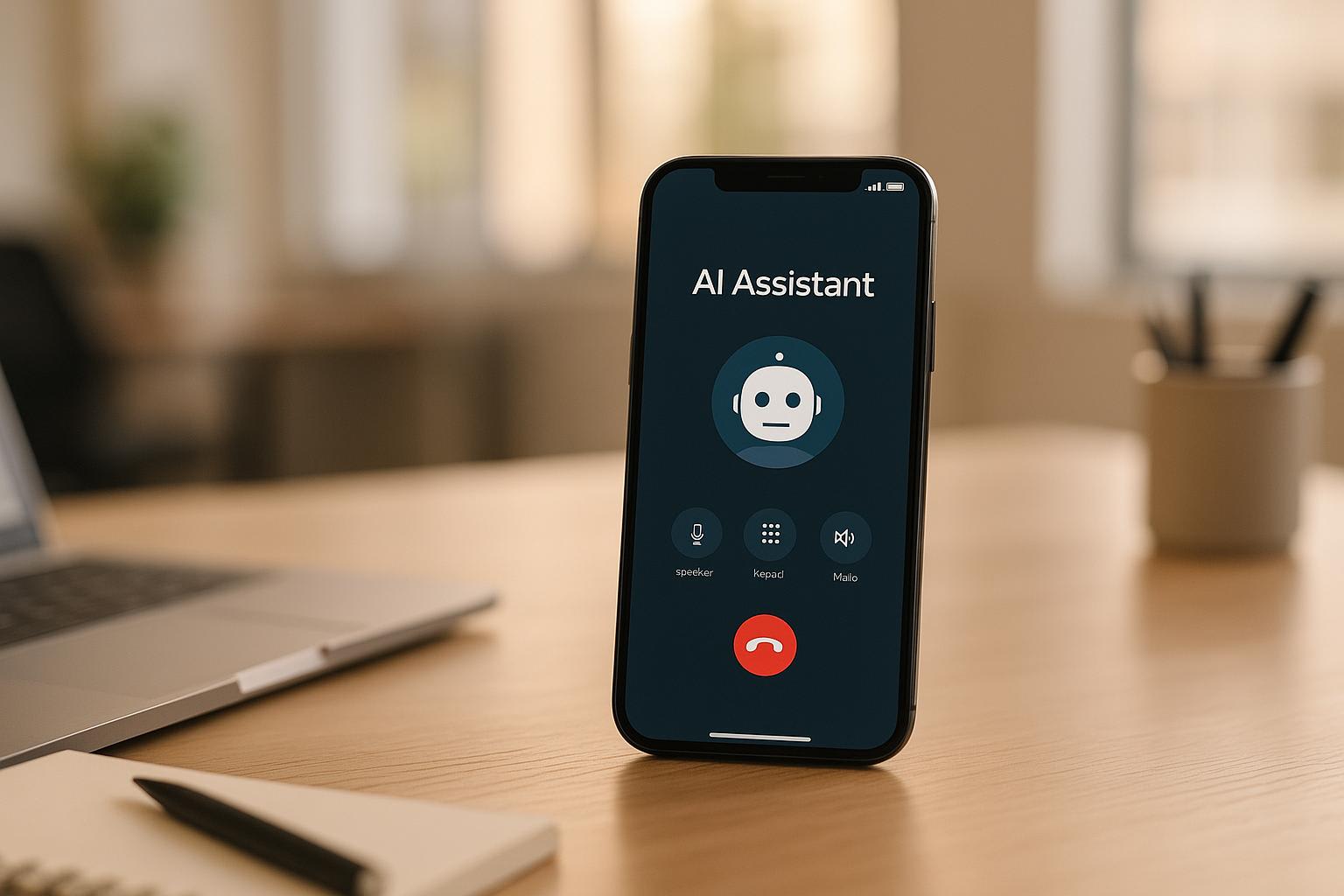
Introduction: The Growing Demand for AI Calling Services in Delhi NCR
The real estate industry in Delhi NCR is becoming increasingly competitive. From residential apartments and luxury properties to commercial spaces, residential plots, and investment opportunities, property businesses receive inquiries through multiple channels. These include Google Ads, Facebook Ads, Instagram campaigns, property portals, websites, and referral networks.
However, generating leads is only one part of the sales process. The real challenge begins when a business needs to contact every lead, understand the customer's requirements, share relevant information, schedule site visits, and follow up consistently.
For many real estate businesses, these activities require a dedicated sales team, continuous calling, and a well-organized lead management process. When inquiry volumes increase, maintaining timely communication with every potential buyer can become difficult.
This is where an AI Calling Service Delhi NCR can help.
AI calling technology enables businesses to automate selected calling tasks using artificial intelligence and conversational voice systems. Depending on the configuration, an AI voice agent can initiate calls, respond to customer questions, collect basic requirements, qualify property inquiries, and help coordinate the next step in the sales process.
For builders, property dealers, channel partners, real estate consultants, and property marketing agencies, AI calling can provide a more organized approach to managing customer inquiries.
UR AI CONNECT offers AI-powered call center automation designed to help businesses streamline customer communication, manage lead follow-ups, and support their sales operations.
In this guide, we will explore how AI calling works, why it is relevant to real estate businesses in Delhi NCR, which tasks it can automate, and how companies can evaluate an AI calling solution for their requirements.
1. What Is an AI Calling Service?
An AI calling service uses artificial intelligence and voice technology to conduct automated telephone conversations. Instead of relying entirely on a human agent for every interaction, businesses can configure an AI voice agent to handle defined tasks and respond to customer inputs.
Traditional automated calling systems often play a prerecorded message and ask customers to select an option using their keypad. AI voice calling can go further by supporting conversational interactions, depending on the system's capabilities.
For example, a potential property buyer might receive a call after submitting an inquiry for an apartment in Gurgaon.
The AI voice agent could introduce the company, confirm whether the customer is interested in the property, ask about the preferred configuration, and determine whether the customer would like additional details or a site visit.
Based on the customer's responses, the system can record the information and, where integrated, pass it to the sales team or lead management system.
An AI calling solution may support tasks such as:
Automated outbound calls to eligible leads.
Initial responses to property inquiries.
Lead qualification based on customer requirements.
Follow-up calls for interested prospects.
Appointment and site-visit coordination.
Basic answers to approved property-related questions.
Lead information collection and reporting.
Escalation to a human sales representative when required.
The exact functionality depends on the AI platform, its configuration, available integrations, and the information provided by the business.
For real estate companies, the objective is not necessarily to replace human sales professionals. Instead, AI calling can help automate repetitive communication so that sales teams can focus more time on meaningful conversations, negotiations, and closing deals.
2. Why Real Estate Businesses in Delhi NCR Need AI Calling
Delhi NCR includes diverse real estate markets, such as Gurgaon, Noida, Greater Noida, Delhi, Ghaziabad, and Faridabad. These markets have different property categories, buyer preferences, investment requirements, and sales cycles.
A business promoting a residential project in Gurgaon may receive inquiries from working professionals looking for apartments. A property dealer in Noida may receive inquiries from families comparing residential societies. A plot marketing company may receive questions about location, plot sizes, payment plans, and site visits.
Managing all these inquiries manually can create operational challenges.
Managing High Volumes of Leads
Real estate businesses running paid advertising campaigns may receive a large number of inquiries within a short period.
Sales representatives must contact prospects, identify serious buyers, update lead records, and follow up with customers who need more time.
When the volume of inquiries exceeds the team's capacity, some leads may not receive timely attention.
An AI calling service can help automate initial outreach and collect basic information from eligible prospects, subject to customer consent and applicable calling requirements.
Improving Follow-Up Consistency
Many potential buyers do not make an immediate purchasing decision. They may compare projects, discuss budgets with family members, arrange financing, or wait for a suitable time to visit a property.
Consistent follow-up can help businesses stay connected with interested prospects.
An AI calling workflow can be configured to contact eligible leads according to an approved schedule, record responses, and identify prospects who request further communication.
Reducing Repetitive Calling Work
Sales teams frequently answer similar questions about project locations, configurations, amenities, prices, and availability.
AI voice agents can handle selected frequently asked questions using approved information.
Questions requiring negotiation, detailed financial advice, legal interpretation, or exceptions to company policy can be transferred to a qualified human representative.
Supporting Business Growth
As a real estate company expands into new locations or launches additional projects, its calling requirements may increase.
AI calling can support the scaling of repetitive communication workflows without requiring every initial interaction to be handled manually.
The business should still assess call quality, customer experience, operating costs, and human escalation capacity before expanding its use.
3. What Is an AI Calling Service in Delhi NCR?
An AI Calling Service Delhi NCR is an AI-powered calling solution used by businesses operating in Delhi and the surrounding National Capital Region.
Depending on the provider and configuration, it can support inbound calls, outbound lead follow-ups, appointment coordination, customer qualification, and other voice-based workflows.
For real estate businesses, the solution can be configured around specific projects, locations, customer categories, and sales processes.
For example, a builder marketing apartments in Sector 80, Gurgaon, might want to identify prospects interested in three-bedroom apartments, understand their approximate budgets, and coordinate site visits with the sales team.
The AI calling workflow can be designed to ask relevant questions and record the responses.
A property dealer serving Noida and Greater Noida might use a different workflow to identify buyers interested in ready-to-move properties, under-construction apartments, or residential plots.
This flexibility makes AI calling relevant to different real estate business models.
When selecting an AI calling provider, businesses should consider:
Natural and understandable voice interactions.
Support for the languages required by their customers.
Configurable calling scripts and qualification questions.
Accurate recording of customer responses.
Integration with existing lead management tools, where available.
Human transfer and escalation options.
Call reporting and performance monitoring.
Compliance with applicable telecom, privacy, and consent requirements.
The most suitable solution is one that fits the company's actual calling process rather than one that offers automation without a clear business objective.
4. How AI Calling Works for Real Estate Lead Generation
AI calling becomes more useful when it is connected to a structured lead management process.
A typical real estate AI calling workflow can follow these steps.
Step 1: Generate Property Inquiries
A real estate business receives inquiries through Google Ads, Facebook and Instagram advertising, its website, property portals, or other marketing channels.
The inquiry may include the customer's name, phone number, preferred property type, and other details voluntarily provided through the lead form.
Step 2: Organize and Verify Lead Information
The business organizes incoming inquiries and checks whether the information is complete enough for follow-up.
Duplicate, incomplete, invalid, or ineligible records can be identified before calling wherever practical.
Contact information should be collected and used appropriately, with the required notices, permissions, and consent in place.
Step 3: Initiate an AI Calling Workflow
An AI voice agent contacts eligible leads according to the configured process and applicable calling rules.
The agent introduces the business, explains the reason for the call, and asks whether the customer is available to speak.
The conversation should be clear, relevant, and respectful of the customer's preferences.
Step 4: Understand the Customer's Requirements
The AI agent asks a few relevant questions, such as:
Which property location are you interested in?
Are you looking for an apartment, plot, or commercial property?
What is your preferred budget range?
Are you planning to purchase soon or researching options?
Would you like to arrange a site visit?
The questions should be limited to what the business genuinely needs to qualify the lead.
Step 5: Classify the Lead
Based on the customer's responses, the system can categorize the inquiry according to agreed criteria.
For example:
High-interest lead: The customer has a defined requirement and requests a sales conversation or site visit.
Nurture lead: The customer is interested but needs additional information or more time.
Unqualified lead: The customer does not match the project's defined requirements.
Callback requested: The customer asks to be contacted at a different time.
These categories should reflect actual customer responses rather than assumptions made by the AI.
Step 6: Share Information With the Sales Team
Where reporting or CRM integration is available, the AI calling system can pass the collected information to the relevant sales representative.
The sales team can then prioritize follow-ups according to customer interest and urgency.
Step 7: Coordinate the Next Action
The next step might include sending approved project information, arranging a callback, scheduling a site visit, or connecting the customer to a human representative.
Any confirmation, message, or booking should reflect what the customer actually agreed to.
This structured workflow helps real estate businesses move from simply collecting leads to managing them more systematically.
5. Benefits of AI Calling Services for Real Estate Companies
AI calling offers several potential advantages when implemented with a well-defined process.
Faster Initial Lead Contact
A customer who submits an inquiry may also be comparing multiple projects.
Timely outreach gives a business an opportunity to understand the customer's interest while the inquiry is still relevant.
AI calling can help initiate contact without requiring a sales representative to manually place every first call.
Actual response times depend on the platform, lead delivery process, system capacity, and calling configuration.
More Consistent Follow-Ups
Human teams may have competing priorities, meetings, site visits, and ongoing negotiations.
An AI calling workflow can follow configured schedules and contact eligible prospects consistently.
It can also help identify customers who request another call, provided those preferences are captured correctly.
Better Lead Qualification
Not every property inquiry represents an immediate sales opportunity.
AI calling can ask preliminary questions to understand the prospect's preferred location, budget, property type, and purchase timeline.
The sales team can use this information to prioritize relevant inquiries instead of treating every lead identically.
Improved Sales Team Productivity
When repetitive qualification tasks are automated, human agents may spend less time on initial screening and more time assisting qualified prospects.
Sales representatives can focus on property presentations, detailed discussions, financing coordination, site visits, and negotiations.
More Organized Customer Information
A structured calling workflow can capture important lead details in a consistent format.
This can make it easier to understand why a prospect is interested, which property they prefer, and what action is required next.
The quality of the information depends on the questions asked, speech recognition accuracy, and the system's integration and recordkeeping capabilities.
Support for Multiple Projects
A real estate company may promote different projects across Gurgaon, Noida, Greater Noida, and other NCR locations.
Separate calling scripts and qualification rules can help the business manage inquiries according to the relevant project.
This requires accurate project information and appropriate configuration for each campaign.
Potential Operational Cost Savings
Automating repetitive tasks may reduce the amount of manual work required per lead.
However, savings are not guaranteed. Businesses should compare platform fees, calling charges, integration costs, human supervision, and the number of qualified opportunities generated.
The right measurement is the overall cost and quality of the sales process, not simply the number of automated calls made.
6. AI Calling for Builders and Real Estate Developers
Builders and property developers often manage large campaigns for residential and commercial projects.
Their sales teams may receive inquiries about property configurations, floor plans, amenities, payment schedules, project status, and location advantages.
An AI calling service can support the initial stages of this process.
Handling New Project Inquiries
When a new residential project launches, advertising may generate a sudden increase in customer inquiries.
An AI voice agent can introduce the project using approved information, identify the customer's primary interest, and record whether they would like a detailed discussion.
This helps the sales team understand which prospects require personal attention.
Qualifying Potential Buyers
Developers often need to identify whether a customer is interested in a particular configuration, price range, and location.
A configured AI workflow can collect this information before transferring the lead to a salesperson.
The AI should not invent prices, claim that units are available without verification, or promise discounts that have not been authorized.
Arranging Site Visits
Site visits are an important part of the real estate sales journey.
An AI calling service can ask whether the customer would like to visit the project and collect preferred dates or times.
If connected to a scheduling system, it may assist with booking confirmation. Otherwise, the information can be passed to the sales team for confirmation.
Supporting Multiple Sales Teams
Developers operating multiple projects may need to route inquiries to different sales teams.
With suitable integrations, lead information can be directed according to project, location, language, or customer requirement.
The routing rules should be established in advance to prevent inquiries from reaching the wrong team.
7. AI Calling for Property Dealers and Brokers
Property dealers and brokers frequently work with buyers who have different budgets, preferred locations, and purchasing timelines.
Some customers are ready to visit a property, while others are exploring the market.
Manually calling every prospect and updating every record can take considerable time.
An AI calling solution can help brokers organize these initial conversations.
Identifying Buyer Requirements
A broker can configure an AI agent to ask whether the customer is interested in buying, renting, or investing in property.
Further questions may cover preferred location, property type, budget, and timeline.
The responses help the broker understand the inquiry before assigning it to a sales representative.
Managing Property Campaigns
A broker promoting residential apartments in Noida may receive inquiries from people who are actually looking for plots in Greater Noida.
An AI calling workflow can identify this difference and classify the lead accordingly.
This can help the business avoid unnecessary manual follow-ups for mismatched inquiries.
Supporting Rental Inquiries
AI calling can also assist rental businesses with preliminary questions about preferred location, monthly rent range, property size, and move-in timeline.
Detailed discussions about tenancy terms, documentation, deposits, and legal obligations should be handled by the appropriate human representative.
Following Up With Interested Prospects
Customers may request a callback after work, after discussing the property with family, or after reviewing project details.
An AI calling workflow can record these preferences and support follow-up at an appropriate time, subject to applicable rules and the customer's permission.
8. AI Voice Bot for Real Estate: Example Conversation
A well-designed AI voice agent should sound clear, natural, and professional.
It should introduce itself honestly, explain the purpose of the call, and give the customer an opportunity to respond or decline.
Here is an illustrative example for a residential property inquiry.
AI Voice Agent: Hello, I am calling on behalf of the real estate team regarding your property inquiry. Is this a convenient time to speak?
Customer: Yes, please tell me.
AI Voice Agent: Thank you. I would like to understand your property requirements so that our team can assist you with relevant options. Are you looking for an apartment, a residential plot, or another type of property?
Customer: I am looking for an apartment.
AI Voice Agent: Certainly. Which location would you prefer, Gurgaon or Noida, or are you open to other locations in Delhi NCR?
Customer: Gurgaon.
AI Voice Agent: Understood. Do you have a preferred budget range or apartment configuration?
Customer: A three-bedroom apartment.
AI Voice Agent: Thank you. Would you like our property consultant to share the available project details and discuss the next steps with you?
Customer: Yes, that would be helpful.
AI Voice Agent: Certainly. I will record your request for the sales team. They can follow up with the relevant information. Thank you for your time.
This example illustrates the intended conversation flow. Actual dialogue, language support, voice quality, response handling, and system capabilities depend on the selected configuration.
A good AI calling experience should not pressure customers or continue asking questions after they decline.
9. AI Calling vs. Traditional Telecalling
Traditional telecalling and AI calling can both support real estate sales. Their suitability depends on the task, customer expectations, and operational requirements.
FactorTraditional TelecallingAI CallingInitial lead contactHandled by human agentsCan be automated for configured workflowsRepetitive questionsAnswered manuallyCan be answered using approved informationComplex negotiationsSuitable for human discussionUsually requires human involvementLead qualificationDepends on agent processCan follow predefined qualification questionsCustomer empathyHuman judgment and interactionDepends on conversation design and system capabilitiesFollow-up workflowManaged by agents or softwareCan support scheduled automated workflowsReportingDepends on records and calling softwareDepends on available logging and reporting featuresScalabilityRequires staffing and managementDepends on platform capacity and operating costs
AI calling is not automatically better for every conversation.
A customer negotiating the price of a property, discussing complex documentation, or raising a sensitive complaint may need a human representative.
For many real estate companies, the most practical approach is a combination of AI automation and human sales expertise.
10. How AI Calling Works With Google Ads and Meta Ads Leads
Google Ads and Meta Ads are commonly used by real estate businesses to attract potential buyers.
However, generating a lead does not guarantee that the person will answer the phone, meet the property's requirements, or proceed with a purchase.
A structured follow-up process can help businesses understand lead quality.
Google Ads Lead Follow-Up
A customer may search online for apartments in Gurgaon, residential plots in Noida, or commercial property in Delhi NCR.
After submitting an inquiry, the customer may be eligible for an AI calling workflow if the appropriate consent and calling permissions are in place.
The AI agent can ask a few qualification questions and record the customer's preferred next step.
Facebook and Instagram Lead Follow-Up
Meta lead forms can generate inquiries directly from Facebook and Instagram campaigns.
These leads can be organized and passed to an AI calling workflow through an available integration or an appropriate data transfer process.
The workflow can help identify whether the person is genuinely interested in the advertised property and whether a callback or site visit is requested.
Website and Landing Page Inquiries
Real estate companies can also collect leads through website forms and dedicated project landing pages.
Where a suitable integration exists, submitted inquiries can be routed into the calling process.
Businesses should ensure that their privacy notices explain how contact information will be used and that the calling activity matches the permissions obtained.
Measuring Campaign Performance
Businesses should evaluate the complete lead journey rather than focusing only on the number of calls.
Useful performance indicators include:
Total inquiries received.
Valid and eligible contact records.
Calls successfully connected.
Customer conversations completed.
Qualified leads identified.
Callbacks requested.
Site visits requested and confirmed.
Site visits completed.
Sales opportunities generated.
Cost per qualified lead.
Cost per completed site visit.
These metrics can help the marketing and sales teams identify whether their advertising, qualification process, and follow-up workflows are working together effectively.
11. AI Calling for Real Estate Lead Qualification
Lead qualification is one of the most useful applications of AI calling in the property sector.
A real estate business may receive inquiries from people with different needs. Some want to purchase immediately, some are researching investment opportunities, and others are simply gathering information.
An AI calling system can collect structured answers to help categorize these inquiries.
Budget-Based Qualification
The AI agent can ask for a budget range relevant to the project.
For example, the business may classify prospects into predefined budget categories based on its actual property offerings.
Budget information should be treated as indicative, because customer requirements may change during the sales process.
Location-Based Qualification
Location is an important consideration for many property buyers.
An AI agent can ask whether the customer prefers Gurgaon, Noida, Greater Noida, Delhi, Ghaziabad, Faridabad, or another location.
This information can help route the inquiry to the appropriate project team.
Purchase Timeline
The AI agent can ask whether the customer is planning to purchase soon or is still researching options.
The answer helps the sales team plan follow-up priorities without treating every prospect as an immediate buyer.
Property Type and Configuration
The workflow can identify whether the customer is interested in residential apartments, plots, villas, commercial spaces, or rental properties.
Additional questions may cover the number of bedrooms, approximate area, or preferred property category.
Site-Visit Interest
The system can ask whether the customer would like to visit the property or speak with a consultant.
This gives the sales team a clear next action and can reduce unnecessary back-and-forth communication.
The objective of qualification is to understand the customer's needs, not to make unsupported assumptions about purchasing capacity or intent.
12. AI Calling for Residential Plots and Investment Properties
Residential plots and investment-oriented property campaigns often require a different qualification approach from apartment sales.
Customers may want to understand the location, plot sizes, infrastructure, connectivity, ownership documentation, payment terms, and project status.
An AI voice agent can collect the customer's initial requirements and direct detailed questions to the appropriate team.
For example, a plot marketing business in Rajasthan may receive inquiries from customers in Delhi NCR who want to learn more about available plots.
The AI agent can ask whether the customer is looking for personal use or investment, which location they prefer, and whether they would like a representative to explain the project.
The sales team can then provide verified details about the project and answer questions requiring professional judgment.
AI calling should not guarantee investment returns, future appreciation, legal approval, or possession dates unless the relevant statements are properly verified and authorized.
Accurate communication is particularly important in real estate because purchasing decisions involve significant financial commitments.
13. AI Calling for Commercial Real Estate
Commercial property businesses may deal with inquiries about offices, retail spaces, shops, warehouses, and other business premises.
These customers often have specific requirements relating to location, floor area, accessibility, commercial use, and budget.
AI calling can support the initial collection of these requirements.
A configured workflow might ask:
What type of commercial property are you looking for?
Which business location do you prefer?
What approximate area do you require?
Do you have a preferred budget range?
Would you like to discuss suitable options with a property consultant?
The responses can help the sales team identify the most relevant inquiries.
For warehouse and industrial property, additional questions may cover broad space requirements and operational needs.
Detailed matters involving zoning, permitted use, statutory approvals, lease terms, and property documentation should be verified by qualified professionals.
14. Inbound AI Calling for Real Estate Businesses
AI calling can support inbound calls as well as outbound lead follow-ups, depending on the platform's capabilities.
A real estate company may receive calls from customers who have seen an advertisement, visited its website, or received project information.
An inbound AI voice agent can be configured to welcome callers, identify the reason for the call, and respond to approved frequently asked questions.
Potential use cases include:
Identifying the project the customer is asking about.
Providing approved introductory project information.
Collecting basic inquiry details.
Recording a request for a callback.
Routing calls to the appropriate department.
Supporting appointment requests.
Escalating complex questions to a human representative.
For example, a caller asking about a residential project in Gurgaon can be directed to the relevant sales team rather than being transferred between unrelated departments.
The system should clearly communicate its capabilities and transfer the caller to a human when it cannot provide a reliable answer.
15. Important Features to Look for in an AI Calling Service
Before choosing an AI calling service in Delhi NCR, real estate businesses should evaluate whether the solution meets their practical requirements.
Natural Voice Interaction
Customers should be able to understand the AI agent clearly.
Businesses should test pronunciation, speaking speed, interruptions, background noise handling, and the agent's ability to respond appropriately to common answers.
Hindi and English Support
Delhi NCR includes customers with different language preferences.
Businesses should verify the languages, accents, and conversational capabilities supported by the specific service rather than assuming every AI calling platform offers the same language quality.
Customizable Calling Scripts
A property developer, broker, and plot marketing agency have different requirements.
The platform should allow the calling workflow to reflect the relevant project information, qualification questions, and escalation rules.
Accurate Information
The AI agent should use approved and up-to-date information.
Prices, available units, project status, offers, amenities, and appointment availability should not be invented or assumed.
Where the system cannot verify a detail, it should record the question for a human representative.
Reporting and Call Records
Businesses should understand which reports and call records are available.
Useful information may include connection outcomes, customer responses, callback requests, qualification categories, and campaign-level performance.
Recording and storing calls should follow applicable privacy and consent requirements.
CRM and Lead Management Integration
Integration can reduce the need to transfer information manually between systems.
Businesses should confirm whether their chosen CRM, lead forms, spreadsheets, or sales tools can be connected and what setup is required.
Human Escalation
A practical AI calling system should define how a customer can reach a human representative when needed.
This is important for complaints, negotiation, complex questions, and requests requiring human judgment.
Compliance and Customer Preferences
Businesses must evaluate calling permissions, consent, applicable telecom requirements, privacy obligations, and requests not to receive further calls.
Automation should support responsible communication rather than simply increase call volume.
16. How to Choose the Right AI Calling Service in Delhi NCR
Selecting a suitable provider requires more than comparing the advertised price per call or minute.
The business should first identify the specific problem it wants to solve.
Define Your Primary Objective
Decide whether the main objective is to follow up with new advertising leads, qualify property inquiries, coordinate site visits, answer inbound calls, or support an existing sales team.
Starting with a clear objective makes it easier to design and evaluate the workflow.
Estimate Your Calling Volume
Estimate how many eligible leads require contact each day or month.
Also consider average conversation duration, unsuccessful calls, repeat attempts, peak calling periods, and expected customer response rates.
These factors affect platform capacity and total operating costs.
Test a Realistic Calling Script
Prepare a script based on actual customer inquiries.
Test common responses, unclear answers, interruptions, requests for callbacks, questions outside the approved information, and customers who decline further communication.
The AI should handle these situations politely and predictably.
Confirm Technical Requirements
Ask the provider about phone number arrangements, telephony connectivity, supported languages, lead imports, reporting, integrations, data security, and human transfer.
Confirm which features are included and which require additional charges or development.
Evaluate Performance With a Pilot
Start with a controlled group of eligible leads and a defined measurement period.
Compare the AI calling workflow with the existing process using consistent metrics.
Evaluate qualified leads, successful conversations, customer complaints, callback completion, site visits, and total cost.
Expand the workflow only when the results and customer experience justify doing so.
17. AI Calling Service Cost and Pricing Considerations
The cost of an AI calling service in Delhi NCR depends on the provider, usage model, calling duration, platform features, integrations, and support requirements.
Some providers charge per minute, while others may have platform subscriptions, setup charges, or additional telephony costs.
Before comparing providers, real estate businesses should understand the complete cost structure.
Important pricing questions include:
Is billing based on connected call duration or another unit?
How are unanswered calls and failed attempts charged?
Is there a minimum monthly commitment?
Are setup and configuration included?
Are custom scripts or integrations charged separately?
Are call recordings and reports included?
Are human transfers charged separately?
Are taxes and telephony fees included in the quoted price?
For a fair comparison, businesses should calculate the total cost of processing a lead and generating a qualified sales opportunity.
For example, a lower price per minute does not necessarily mean a lower cost per qualified lead if the conversation quality is poor or the workflow generates few useful opportunities.
Similarly, a more expensive service may not be appropriate if the business receives only a small number of inquiries.
The best pricing model is one that matches the company's calling volume, requirements, and measurable business objectives.
18. Common Mistakes to Avoid When Using AI Calling for Real Estate
AI calling can improve workflows, but poor implementation can reduce its effectiveness.
Using the Same Script for Every Project
A luxury apartment buyer may have different questions from someone looking for an affordable plot.
The calling script should reflect the relevant property category and project details.
Asking Too Many Questions
Long qualification conversations can frustrate customers.
Start with a few essential questions and collect additional details only when they are relevant.
Providing Unverified Information
Incorrect pricing, outdated availability, exaggerated amenities, and unsupported investment claims can damage customer trust.
Use approved information and establish a process for updating it.
Calling at Inappropriate Times
Repeated calls or poorly timed contact can create a negative experience.
Businesses should configure reasonable calling windows, respect customer preferences, and follow applicable telecom requirements.
Ignoring Human Escalation
AI should not be forced to handle every situation.
When a question requires negotiation, detailed explanation, or human judgment, the system should provide an appropriate escalation path.
Measuring Only Call Volume
A large number of calls does not automatically mean better business results.
Track qualified inquiries, customer experience, completed site visits, and sales opportunities alongside call activity.
Ignoring Privacy and Consent
Businesses should use customer information only for permitted purposes and maintain appropriate consent records.
They should also respect opt-out requests and applicable restrictions on automated or commercial calls.
A responsible implementation protects the customer's experience as well as the company's reputation.
19. AI Calling and Real Estate Sales Automation: The Future
AI calling is one part of a broader shift toward automation in sales and customer communication.
Real estate businesses are increasingly interested in connecting advertising, lead management, voice communication, and sales reporting into a more organized process.
In a connected workflow, a customer may submit an inquiry through a website, receive an eligible follow-up call, answer preliminary qualification questions, and request a site visit.
The collected information can then be shared with the appropriate salesperson through available integrations.
Over time, businesses may use performance data to improve their scripts, identify frequently asked questions, and understand where customers drop out of the sales process.
However, effective automation requires reliable data, accurate information, appropriate permissions, and ongoing supervision.
AI should support the sales team's ability to serve customers, not create unnecessary calls or replace human judgment where it matters.
For real estate companies in Delhi NCR, the opportunity is to build a process in which marketing generates relevant inquiries, AI helps organize initial communication, and human professionals focus on building relationships and completing transactions.
20. Why Consider UR AI CONNECT for AI Calling?
UR AI CONNECT provides an AI-powered call center automation offering for businesses seeking to improve their calling workflows.
For real estate businesses, an AI calling solution can be explored for use cases such as initial lead follow-up, property inquiry qualification, customer requirement collection, and coordination with sales representatives.
The suitability of a particular workflow depends on the business's requirements and the platform configuration.
Before implementation, real estate companies should define the intended use case, prepare approved project information, identify the required languages, and determine how customer responses will reach their sales team.
A practical setup should include clear calling scripts, qualification rules, escalation procedures, and performance measurements.
Businesses should also verify the specific features, integrations, pricing, calling capacity, and compliance arrangements applicable to their selected plan.
UR AI CONNECT aims to help businesses explore AI-powered calling as part of a more structured approach to customer communication and lead management.
If you are a builder, broker, property dealer, channel partner, or real estate marketing agency in Delhi NCR, an initial assessment can help determine whether AI calling is suitable for your sales process.
21. Frequently Asked Questions About AI Calling Services in Delhi NCR
1. What is the best AI Calling Service in Delhi NCR for real estate?
The best service depends on your calling volume, budget, required languages, lead management process, and desired automation features.
Real estate businesses should compare voice quality, qualification capabilities, reporting, integration options, human escalation, support, and the complete cost of operation.
UR AI CONNECT is an option to evaluate for AI-powered calling and call center automation.
2. How can AI calling help real estate builders?
AI calling can support initial lead contact, collect basic property requirements, answer approved questions, record callback requests, and help coordinate site visits.
This can allow sales representatives to focus more time on qualified prospects and detailed customer discussions.
3. Can AI calling be used for property dealers and brokers?
Yes. Depending on the system's configuration, property dealers and brokers can use AI calling to identify buyer requirements, classify inquiries, follow up with eligible prospects, and route customer information to their sales teams.
4. Can AI calling follow up on Facebook and Instagram leads?
Yes, where an appropriate integration or lead transfer process is available.
Businesses should ensure that the customer has provided the necessary permission for the intended contact and that the calling process complies with applicable platform, telecom, and privacy requirements.
5. Can AI calling qualify real estate leads?
An AI voice agent can ask predefined questions about preferred location, property type, budget range, and purchasing timeline.
The system can then categorize responses according to configured rules and pass relevant information to the sales team.
6. Can an AI voice agent arrange property site visits?
An AI voice agent can ask customers about their interest in a site visit and collect their preferred dates or times.
Actual booking confirmation depends on whether the system has access to a suitable scheduling process or requires confirmation from a human representative.
7. Does AI calling replace a real estate sales team?
No. AI calling is best considered a tool for automating suitable repetitive tasks.
Human professionals remain important for negotiations, detailed project explanations, documentation, relationship building, and closing property transactions.
8. Is AI calling suitable for luxury real estate projects?
It can be suitable for initial inquiries and routine qualification when the conversation is designed to match the project's positioning.
Luxury property sales often require highly personalized discussions, so businesses should ensure that interested customers can reach an experienced human consultant easily.
9. Can AI calling support residential plot marketing?
Yes. It can collect preliminary information about location preferences, plot requirements, budget ranges, and requests for additional information.
Project approvals, ownership documentation, investment claims, and other detailed matters should be handled using verified information and qualified human assistance.
10. How much does an AI calling service cost in Delhi NCR?
Pricing varies by provider, call duration, usage, platform features, integrations, and setup requirements.
Request a complete quotation that explains billing units, minimum commitments, telephony charges, setup costs, and taxes before making a decision.
11. Can AI calling support Hindi and English conversations?
Language support varies by provider and configuration.
Before selecting a service, test the specific Hindi and English conversations your customers are likely to have, including pronunciation of project names, locations, and property terminology.
12. Is AI calling suitable for small real estate businesses?
It may be suitable if a small business receives enough eligible inquiries to justify the cost of automation.
A limited pilot can help determine whether the service improves lead handling and saves meaningful staff time.
13. What information is required to configure AI calling for real estate?
Common requirements include the project name, verified property details, approved calling script, qualification questions, supported languages, lead source, calling permissions, escalation contacts, and reporting requirements.
The exact setup depends on the selected platform and workflow.
14. How can businesses measure AI calling performance?
Useful metrics include successful connections, completed conversations, qualified leads, callbacks, site visits, customer complaints, cost per qualified lead, and sales opportunities generated.
Results should be compared with the existing process to understand the actual business impact.
15. Is AI calling allowed for real estate marketing in India?
Commercial and automated calling must follow applicable Indian telecom requirements, including relevant rules on consent, commercial communications, calling channels, and customer preferences.
Businesses should confirm the current requirements applicable to their use case and obtain appropriate permissions before launching a campaign.
Conclusion: Build a More Organized Real Estate Calling Process
Real estate businesses in Delhi NCR need more than a steady flow of inquiries. They need a consistent process for contacting potential buyers, understanding property requirements, managing follow-ups, and coordinating sales activities.
An AI Calling Service Delhi NCR can help automate selected parts of this process by supporting initial lead contact, structured qualification, routine responses, and coordination with human sales teams.
For builders, brokers, property dealers, channel partners, and real estate marketing agencies, the value of AI calling depends on how effectively it fits into the existing sales workflow.
The best starting point is to identify one repetitive calling task, create a clear workflow, test it with eligible leads, and measure the results using qualified opportunities and customer experience rather than call volume alone.
UR AI CONNECT can be considered by businesses exploring AI-powered call center automation for their customer communication needs.
Ready to explore AI calling for your real estate business?
Visit UR AI CONNECT at https://uraiconnect.com/ to learn more about the offering and discuss a suitable AI calling workflow for your business.
Automate suitable calling tasks, organize lead follow-ups, and give your sales team more time to focus on meaningful customer conversations.