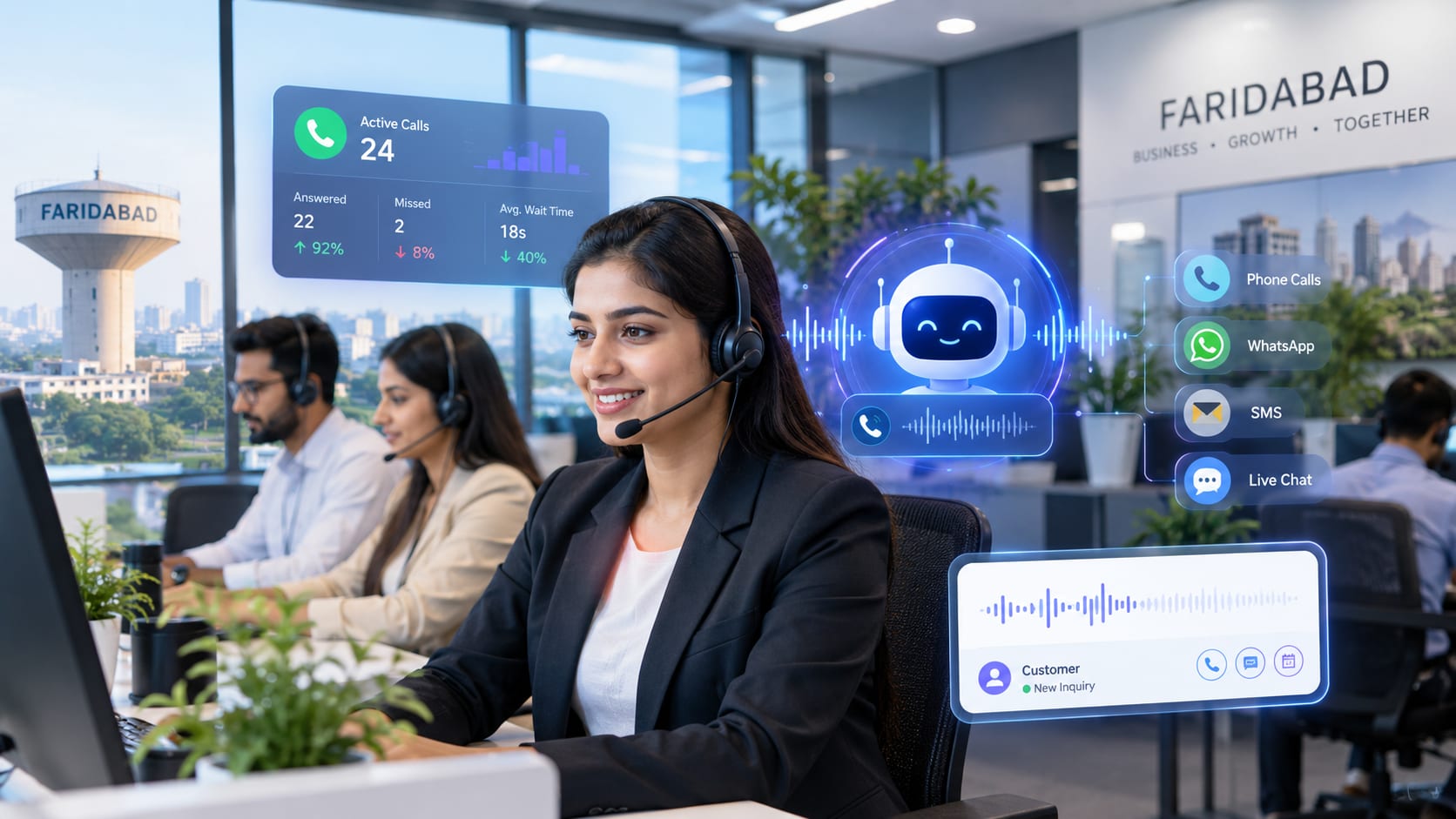

Businesses often need to communicate with a large number of customers quickly, but manual calling can become difficult to manage as contact volumes increase. A voice campaign service in Delhi allows businesses to use automated voice calls to deliver information, follow up with prospects, send reminders, support marketing campaigns, and handle other customer communication requirements at scale.
Instead of depending entirely on employees to call every contact individually, an automated voice campaign can use predefined calling workflows to contact selected numbers, play a recorded message or connect the recipient to a person, capture responses where supported, and provide campaign-level reporting.
For businesses operating in Delhi, voice communication can be useful across real estate, healthcare, education, retail, financial services, professional services, sales teams, and customer support operations. The right approach depends on the purpose of the campaign, the audience, the expected call volume, the type of communication, and applicable telecom requirements.
This guide explains how voice campaign services work, where businesses can use them, what benefits they can provide, what limitations should be considered, and how to evaluate a voice campaign service provider in Delhi. It also explains the difference between voice broadcasting, automated calling, and IVR-based communication so that businesses can choose a setup that matches their operational requirements.
What Is a Voice Campaign Service in Delhi and How Does It Work?
Direct Answer:
A voice campaign service is a technology-based communication system that allows businesses to send automated voice calls to selected contacts. Depending on the campaign design, calls can play prerecorded messages, connect recipients to agents, collect responses, or route callers through IVR workflows while providing delivery and campaign reports. (uraiconnect)
What Is a Voice Campaign Service?
A voice campaign service is a platform or managed communication solution that helps businesses make voice calls to multiple recipients through an organized campaign.
The campaign may involve a simple prerecorded announcement or a more interactive workflow. For example, a business may upload an approved contact list, create a voice message, configure calling rules, launch the campaign, and monitor call activity through a reporting interface.
The objective is not simply to make more calls. A properly designed campaign should make communication more structured.
Common campaign objectives include:
Sending customer notifications
Following up with leads
Promoting an offer
Confirming appointments
Sharing service information
Reminding customers about scheduled activities
Conducting customer surveys
Reaching sales prospects
Supporting customer service operations
Connecting interested recipients with human agents
This makes voice communication different from manually dialling individual customers one by one.
How Does an Automated Voice Campaign Work?
An automated voice campaign Delhi setup generally follows a series of steps.
1. Campaign objective is defined
The business first determines why the campaign is being conducted.
For example:
A real estate company may want to follow up with property enquiries.
A clinic may want to remind patients about appointments.
An educational institute may want to notify applicants about an important update.
A retailer may want to communicate an approved promotional message.
A service company may want to follow up on enquiries.
The objective affects the message, audience, calling workflow, and reporting requirements.
2. Contact data is prepared
The business prepares the recipient list according to the campaign requirements.
The data may include:
Customer name
Phone number
Lead status
Appointment information
Customer segment
Campaign category
Other information needed by the workflow
Good data preparation is important because incorrect, outdated, duplicate, or unauthorized contacts can reduce campaign quality and create compliance problems.
3. Voice content is prepared
The business creates the voice message or calling script.
A simple campaign could say that a service appointment is scheduled for a particular date.
A promotional campaign may communicate an offer.
A lead-follow-up campaign may use a short introduction before giving the recipient an option to connect with a sales representative.
The message should be concise. A recipient should understand the reason for the call quickly.
4. Calling workflow is configured
The system can be configured according to the campaign objective.
Depending on the solution, the workflow may include:
Contact List → Automated Call → Voice Message → Recipient Response → Action → Report
An interactive campaign can be more advanced:
Contact List → Automated Call → Voice Prompt → Keypad/Input → Decision → Agent/IVR/Next Action
The exact capabilities depend on the provider and technical setup.
5. Calls are delivered
The configured platform initiates calls according to the campaign settings.
An auto-dialer call is generally a call initiated automatically using stored or software-generated numbers, after which a recorded message may be played or the call may be connected to a live person.
This allows a business to manage high-volume communication without requiring an employee to manually dial every number.
6. Responses can trigger actions
A voice campaign does not always have to be one-way communication.
For example, a campaign may ask:
“Press 1 to speak with our team.”
The system can then route the recipient to an appropriate team or workflow if that capability is supported.
Other campaigns may use responses to classify contacts.
For example:
Interested
Not interested
Call back later
Existing customer
Requires support
This can make voice campaigns more useful for sales and customer engagement.
7. Results are monitored
Campaign reporting can provide information about activity and outcomes.
Depending on the platform, reports may include:
Calls attempted
Calls answered
Calls not answered
Call duration
Connected calls
Failed calls
Call status
Response selections
Campaign completion
Other available metrics
Businesses should evaluate reporting requirements before selecting a voice campaign company in Delhi.
Voice Broadcasting and Automated Calling
Voice broadcasting generally refers to sending a voice message to multiple recipients through an automated calling system.
For example, a company may have a prepared message that needs to reach a defined customer group.
Automated calling can be broader. It may include prerecorded messages, call routing, agent connections, response collection, or other workflow elements.
The difference is important because not every business needs the same type of campaign.
A simple announcement may require only voice broadcasting.
A sales follow-up may need automated calling and agent transfer.
A customer-service workflow may benefit from IVR.
How Does IVR Fit Into a Voice Campaign?
IVR, or Interactive Voice Response, allows callers or recipients to interact with a voice system using keypad inputs or other supported mechanisms.
For example:
“Press 1 for Sales. Press 2 for Customer Support. Press 3 for Accounts.”
IVR can therefore add structure to voice communication.
A business may combine a voice campaign with IVR when the campaign needs to direct recipients toward different departments or actions.
For example, a service company could send a notification asking customers to call a support number. The IVR system can then route those customers according to their selection.
Voice campaigns and IVR are related but are not identical.
A voice broadcasting campaign can simply deliver a message. IVR introduces an interaction and routing layer.
Promotional Voice Campaigns
Promotional campaigns are designed to communicate marketing information.
Examples may include:
New service announcements
Offer communication
Product launches
Event invitations
Campaign notifications
Promotional communication requires particular attention to applicable telecom rules, consent, preferences, registration, and calling resources.
Businesses should not assume that an automated calling platform automatically makes every marketing call permissible.
Transactional and Service Communication
Customer communication can also be operational rather than promotional.
Examples include:
Appointment-related communication
Service updates
Safety information
Warranty information
Transaction-related notifications
Customer support communication
The classification of a communication matters because regulatory requirements can differ according to the type of communication.
Lead Follow-Up Campaigns
Sales teams often receive more enquiries than they can immediately call manually.
A voice calling campaign Delhi workflow can help organize follow-up.
For example:
New enquiry enters the CRM.
Contact becomes eligible for follow-up.
Automated call is initiated.
Recipient answers.
Recipient receives information or is connected with a sales representative.
Outcome is recorded.
Sales team follows up according to the result.
This can reduce repetitive manual work while keeping the sales process organized.
Regulatory and Compliance Considerations
Voice campaigns in India need to be designed with telecom regulations and customer preferences in mind.
TRAI defines unsolicited commercial communication, or UCC, to include unwanted commercial messages and voice calls that are not in accordance with applicable consent or registered preferences. TRAI also provides specific guidance around commercial communication, registered senders, headers, consent, and telemarketers.
TRAI's current regulatory listings also show that the Telecom Commercial Communications Customer Preference Regulations have been amended over time, including a Third Amendment in September 2026. Businesses should therefore verify the current requirements with their telecom provider or compliance team rather than relying on an old calling-process checklist.
The Department of Telecommunications has also documented the use of the 1600 numbering series for service and transactional voice calls, including allocation for the Delhi service area. The precise applicability to a particular business depends on the communication type and telecom arrangement.
A business planning a bulk or automated calling campaign should therefore ask its provider how the proposed setup handles:
Sender registration
Consent
Preference management
Commercial communication classification
Calling resources
Customer complaints
Reporting
Traceability
Applicable numbering arrangements
Current telecom requirements
Compliance should be considered during campaign planning rather than after a campaign has already been launched.
What Makes a Voice Campaign Effective?
Technology alone does not make a campaign effective.
A useful campaign usually combines:
A clearly defined audience
A relevant message
Accurate contact data
Appropriate timing
A simple call flow
A clear next action
Reliable delivery
Useful reporting
Proper consent and preference handling
A 20-second message that clearly communicates one action can be more practical than a long message containing several unrelated points.
Businesses should therefore focus on communication quality rather than simply increasing call volume.
What Are the Benefits of Voice Campaign Services for Delhi Businesses?
Direct Answer:
Voice campaign services can help businesses communicate with many customers or prospects through structured automated calling. They can support lead follow-up, customer notifications, appointment reminders, promotions, surveys, and service communication while reducing repetitive manual calling and making campaign activity easier to organize and monitor.
Faster Customer Communication
Manual calling can take considerable operational effort when a team needs to contact many people.
Automated voice calling can organize large contact lists and initiate calls according to configured campaign rules.
This can be useful when communication needs to happen within a defined period.
For example, if a business needs to remind a large number of customers about an upcoming appointment, automated calling can help distribute the communication workload.
The value comes from improving the process rather than simply increasing the number of calls.
Large-Scale Calling
One of the most obvious applications of a bulk voice campaign service Delhi is large-scale communication.
A business can organize a defined contact list and launch an appropriate campaign through its selected communication platform.
This can be relevant for:
Customer notifications
Lead follow-up
Event communication
Service updates
Marketing communication
Surveys
Operational reminders
However, large-scale calling should always be managed carefully. High volume does not remove the need for correct customer data, consent, preference management, and regulatory compliance.
Lead Generation and Lead Qualification
Voice campaigns can support different stages of a sales process.
For example, a company may receive leads from:
Website forms
Advertising
Social media
Landing pages
Offline enquiries
Business listings
Referral channels
Instead of asking sales representatives to manually call every lead immediately, an automated workflow can help initiate structured communication.
A simple campaign might identify whether a person is interested.
A more advanced setup can route interested recipients to a sales team.
For example:
New Lead → Automated Voice Call → Interest Response → Sales Team → Follow-Up
This can make lead management more systematic.
A voice campaign should not be presented as a guarantee of lead generation or sales. Results depend on the quality of the audience, offer, message, timing, sales process, and many other factors.
Customer Notifications
Voice is useful when a business needs to communicate information that customers should notice quickly.
Possible examples include:
Appointment reminders
Service notifications
Delivery-related communication
Account-related information
Maintenance notifications
Important operational updates
A voice call can complement other communication channels such as SMS, RCS, WhatsApp, or email.
The appropriate channel depends on the communication objective and customer preference.
Appointment Reminders
Healthcare providers, clinics, consultants, training institutes, and service businesses can use voice communication for appointment-related workflows.
For example:
“Your appointment with the clinic is scheduled for tomorrow at 4 PM. Please contact the clinic if you need assistance.”
A reminder campaign can reduce repetitive manual calling.
For healthcare businesses in particular, the content should be carefully designed so that sensitive information is not unnecessarily disclosed through automated messages.
Promotional Campaigns
A business voice campaign Delhi strategy can also be used for marketing communication where the campaign is appropriate and compliant.
Possible applications include:
Offer announcements
New product communication
Service launches
Event invitations
Customer reactivation
Seasonal campaigns
Promotional communication needs more careful planning than simply uploading a customer list and starting calls.
The business should establish:
Who should receive the campaign
Why they should receive it
What consent or preference basis applies
What message will be delivered
What action the recipient should take
How opt-outs or complaints will be handled
Consistent Communication
Human callers may use different words when communicating the same information.
An approved voice script provides consistency.
For example, a company can define:
Opening message
Company identification
Main information
Customer action
Transfer option
Closing message
This can help create a consistent communication experience.
Consistency can be particularly useful for organizations with multiple sales or support teams.
Reduced Repetitive Work
A significant operational benefit of automation is reducing repetitive tasks.
Employees do not necessarily need to spend their entire working day manually dialling numbers and delivering the same basic message.
Automation can handle appropriate repetitive communication while employees focus on conversations that require judgement, negotiation, technical support, or relationship management.
This does not mean that automation should replace human communication in every situation.
Instead, a practical model can divide communication into two parts:
Automation for repetitive communication + Human teams for complex conversations
Better Campaign Organization
A structured campaign can make it easier to understand what happened after a campaign was launched.
For example, a business may want to know:
How many contacts were included?
How many calls were attempted?
How many were answered?
How many recipients interacted?
How many requested a callback?
How many were transferred?
How many calls failed?
Available reporting depends on the provider and platform.
The important point is that businesses should select a system that provides the reporting required for their actual workflow.
Scalability
A manual calling process may become harder to manage as a business grows.
Suppose a service company initially has 100 enquiries per month and later handles several thousand.
The business may need a more structured communication process.
A voice campaign solution Delhi can provide a technology layer that can be adapted to larger communication requirements, subject to the provider's technical capacity and applicable telecom controls.
Scalability should therefore be evaluated before choosing a platform.
Industry-Specific Applications in Delhi
Voice campaigns can be relevant to many types of businesses operating in Delhi.
Real Estate
A real estate company may use voice campaigns for appropriate lead follow-up.
For example:
A prospect submits an enquiry about a residential property. An automated voice workflow can contact the prospect and provide an option to connect with the sales team.
The sales team can then focus on prospects who require detailed discussion.
Healthcare
Clinics and healthcare providers may use voice communication for appropriate appointment-related notifications, service communication, or administrative reminders.
The message should be designed carefully, particularly where personal or sensitive information could be involved.
Education
Educational institutions may use voice communication for administrative notifications, admissions-related communication, event information, or other appropriate updates.
For example, an institute may communicate that an application-related deadline is approaching.
Retail
Retail businesses can use voice campaigns for customer communication and appropriate marketing campaigns.
For example, a business may communicate information about a store event or promotional campaign to an eligible customer segment.
Financial Services
Financial service organizations may have a variety of customer communication requirements.
Because financial communication can involve sensitive information and strict regulatory considerations, the calling workflow and message content should be reviewed carefully before deployment.
Service Businesses
Home services, repair companies, consultants, maintenance businesses, and other service providers can use voice communication for enquiry follow-up and customer notifications.
For example, a service company may call customers to confirm a scheduled service visit.
Voice Campaigns for Sales Teams
Sales teams can use automation to manage repetitive parts of the sales process.
A campaign could be designed around different lead stages.
For example:
New Lead
↓
Automated Introduction
↓
Customer Response
↓
Interested
↓
Sales Representative
Another customer may select “Call Later,” allowing the workflow to classify the contact for future action.
This can help sales teams organize their workload.
Voice Campaigns for Customer Support
Customer support teams can use voice technology for basic communication and routing.
For example, an organization can direct callers through an IVR menu:
Press 1 for Sales
Press 2 for Support
Press 3 for Billing
The purpose is not necessarily to eliminate human support.
Instead, IVR and automation can help customers reach the correct team without unnecessary transfers.
Customer Engagement Across Multiple Channels
Voice communication does not need to operate in isolation.
A business communication strategy can combine:
Voice
SMS
RCS
WhatsApp
Email
Website forms
CRM workflows
For example:
Lead Form → SMS Confirmation → Voice Follow-Up → Sales Agent → CRM Update
Such workflows can provide a more organized customer journey.
UR AI CONNECT and Business Communication
UR AI CONNECT provides technology and business communication solutions covering areas such as voice calling, AI calling, IVR, automated customer communication, lead generation, and customer engagement.
For businesses evaluating communication technology, the company can be considered as one potential technology partner for designing communication workflows according to business requirements.
Its website provides additional information about the company's communication solutions and capabilities: UR AI CONNECT.
The appropriate solution should always depend on the business's actual campaign objectives, communication volume, audience, integrations, and compliance requirements rather than on a generic claim that one technology fits every organization.
How Can Businesses Choose the Right Voice Campaign Service Provider in Delhi?
Direct Answer:
Businesses should evaluate a voice campaign provider based on campaign volume, voice quality, delivery reliability, automation, IVR functionality, reporting, integrations, support, data handling, compliance processes, pricing structure, and scalability. The right provider should match the company's actual communication workflow rather than offering features that the business does not need.
Start With the Campaign Requirement
Before contacting a provider, the business should define the purpose of the campaign.
Useful questions include:
Is the campaign promotional or service-related?
Is the communication one-way or interactive?
Does the recipient need to respond?
Should calls be transferred to employees?
Is IVR required?
Does the business need CRM integration?
What type of reporting is necessary?
How frequently will campaigns be conducted?
Clear requirements make provider comparison easier.
Estimate the Expected Call Volume
Call volume is another important factor.
A business should estimate:
Average calls per campaign
Peak campaign volume
Number of campaigns per month
Expected call duration
Number of concurrent calls required
Geographic coverage
Expected growth
A provider suitable for a small campaign may not necessarily have the same setup required by a high-volume enterprise operation.
Check Voice Quality
The voice experience matters.
Poor audio quality can make a professional organization appear less reliable.
Businesses should evaluate:
Voice clarity
Call stability
Audio consistency
Recording quality
Voice options
Language requirements
Accent and pronunciation
Background noise
Connection quality
If the campaign targets customers across different regions, language and pronunciation may also matter.
Evaluate Delivery Reliability
A voice campaign is useful only when calls can be delivered reliably.
Businesses should ask providers about:
Network infrastructure
Delivery monitoring
Failure handling
Retry mechanisms
Call routing
Technical support
Reporting
The provider should be able to explain how unsuccessful calls are identified and handled.
Review IVR Capabilities
If the campaign requires interaction, IVR may be important.
Businesses should ask:
Can the system create multi-level IVR?
Can calls be routed to departments?
Can keypad responses be captured?
Can the workflow transfer calls to agents?
Can IVR connect with CRM systems?
Can business rules determine the next action?
Not every business needs complex IVR. A simple campaign may require only a recorded voice message.
Check Automation Features
Automation should be evaluated according to the actual process.
Useful capabilities may include:
Scheduled campaigns
Contact segmentation
Automated retries
Call routing
Response classification
CRM triggers
Agent transfer
Campaign scheduling
Reporting
API integration
The more complicated the workflow, the more important it becomes to understand the provider's automation capabilities.
Look at Reporting and Analytics
Reporting should answer practical business questions.
For example:
Campaign Performance
Total contacts
Calls attempted
Calls connected
Calls failed
Call duration
Responses
Transfers
Lead Activity
Interested
Not interested
Callback requested
Connected to sales
Follow-up required
The exact metrics available vary by platform.
A business should therefore request a demonstration or sample report before making a decision.
Consider CRM Integration
CRM integration can make voice campaigns more useful for sales teams.
For example:
CRM Lead → Campaign Trigger → Voice Call → Customer Response → CRM Status Update
This reduces the need for employees to manually update every interaction.
Businesses should ask whether the provider supports:
APIs
Webhooks
CRM integration
Custom integrations
Lead-status updates
Call logs
Automated triggers
Assess Customer Support
Technical support becomes particularly important when campaigns are time-sensitive.
A business should understand:
Support channels
Support availability
Escalation process
Technical assistance
Account management
Issue-resolution process
A provider should be able to explain how technical problems are handled during an active campaign.
Ask About Data Security
Voice campaigns may involve customer phone numbers, lead information, appointment information, and other business data.
Businesses should ask how data is:
Stored
Transferred
Accessed
Protected
Retained
Deleted
The exact requirements depend on the organization's industry, data, contractual obligations, and applicable laws.
Businesses should avoid sharing more personal information than is necessary for a campaign.
Understand Compliance Responsibilities
Compliance should be one of the provider-selection criteria.
TRAI's current guidance distinguishes commercial communication, promotional communication, service communication, consent, registered preferences, and telemarketing functions. TRAI also maintains specific guidance for registered and unregistered telemarketers and voice-calling functions.
Businesses should therefore ask providers:
How is commercial communication classified?
How is consent handled?
How are customer preferences considered?
What registration processes apply?
How are complaints handled?
What calling resources are used?
What records are maintained?
How are campaigns monitored for compliance?
A provider should not simply tell a business that a campaign is “fully compliant” without explaining the relevant process.
Understand Pricing Factors
There is no single universal price for a voice campaign.
Pricing can depend on:
Number of calls
Call duration
Number of concurrent calls
Type of calling resource
IVR requirements
Recording requirements
Integration
Reporting
Support
Campaign frequency
Additional platform features
Instead of comparing only the headline price, businesses should compare the total service structure.
For example, a lower basic price may not include the integrations or reporting required by the business.
Consider Scalability
The selected platform should be able to accommodate future requirements.
A growing company may eventually need:
Higher calling volume
More campaigns
CRM integration
Multiple departments
More complex IVR
Better reporting
Additional communication channels
Selecting a scalable platform can reduce the need to redesign the entire communication process later.
Test Before a Large Campaign
A pilot campaign can help identify problems before wider deployment.
A business can test:
Voice quality
Call flow
Script length
Customer response
Agent transfer
Reporting
Data handling
Integration
Technical support
Testing is particularly useful when the campaign involves a new workflow.
Prepare the Voice Script Carefully
A good script should be:
Short
Clear
Relevant
Easy to understand
Professionally recorded
Focused on one primary action
For example, a lead follow-up call could begin with a clear company identification, explain why the recipient is being contacted, and provide a simple next step.
Long introductions can increase the chance that recipients disconnect before hearing the main message.
Segment the Audience
A single message should not necessarily be sent to every contact.
For example, a real estate business may have:
New enquiries
Existing prospects
Previous customers
Investors
Rental enquiries
Each group may require different communication.
Audience segmentation can make voice campaigns more relevant.
Track Outcomes, Not Just Call Volume
A campaign with a large number of calls is not automatically a successful business process.
Businesses should consider meaningful outcomes.
For a lead campaign, these may include:
Qualified enquiries
Requested callbacks
Sales conversations
Appointments
For customer communication, outcomes may include:
Successful notification
Confirmation
Customer response
Support request
The appropriate measurement depends on the campaign objective.
Common Mistakes to Avoid
Businesses planning a voice campaign services Delhi strategy should avoid several common mistakes.
Using outdated contact lists
Old data can lead to failed calls and poor customer experience.
Making the message too long
Recipients need to understand the purpose quickly.
Ignoring customer preferences
Commercial communication should be designed around applicable consent and preference requirements.
Treating every call as promotional
Service, transactional, and promotional communication can have different regulatory treatment.
Choosing a provider only on price
The lowest price may not provide the required quality, integrations, reporting, or support.
Launching without testing
A pilot can identify problems with scripts, audio, routing, and integrations.
Measuring only total calls
Business outcomes are more useful than raw call volume.
Frequently Asked Questions
What is a voice campaign service in Delhi?
A voice campaign service allows businesses to make structured automated voice calls to selected recipients. Depending on the platform, campaigns can deliver prerecorded messages, connect recipients with agents, collect responses, use IVR, and provide campaign reports.
How does an automated voice campaign work?
An automated campaign generally starts with a defined contact list and campaign objective. The platform initiates calls according to configured rules, plays a voice message or connects the recipient to a person, records available responses, and provides campaign-level reporting.
What businesses can use voice campaign services?
Many business categories can use voice communication, including real estate companies, healthcare providers, educational institutes, retail businesses, service companies, sales teams, and customer support organizations. The appropriate campaign depends on the business objective and communication requirements.
What is the difference between voice broadcasting and IVR?
Voice broadcasting primarily focuses on delivering a voice message to multiple recipients. IVR adds interaction through a menu or response mechanism, allowing customers to select options and potentially reach different departments or workflows.
Can voice campaigns be used for lead generation?
Yes, voice campaigns can support lead follow-up and lead qualification. For example, an automated call can contact an enquiry and provide an option to speak with a sales representative. The campaign itself does not guarantee leads or sales; outcomes depend on the audience, message, timing, offer, and sales process.
How can businesses send bulk voice calls?
Businesses generally use a voice communication platform or telecommunication service that supports automated calling. The business defines the campaign, prepares the recipient data and voice content, configures the calling workflow, and launches the campaign through the provider's system.
How much does a voice campaign service cost?
Pricing varies according to call volume, duration, calling resources, IVR, integrations, reporting, support, and other requirements. Businesses should request a quotation based on their expected campaign volume and technical requirements rather than relying on a generic price.
What should businesses check before choosing a voice campaign provider?
Businesses should review voice quality, delivery reliability, call capacity, automation, IVR, reporting, integrations, customer support, data handling, compliance processes, pricing, and scalability. A provider should be selected according to the business's actual workflow.
Can voice campaigns be integrated with CRM systems?
Some voice campaign platforms support APIs, webhooks, or direct CRM integrations. Integration can allow businesses to trigger calls from CRM events and record call outcomes in customer records. Available integration options depend on the provider.
Are voice campaigns suitable for customer notifications?
Voice campaigns can be suitable for certain customer notifications, such as appropriate appointment or service-related communication. The message type, recipient preferences, consent, and applicable telecom requirements should be reviewed before sending commercial or automated voice communication.